You are excited to introduce solids, but also worried. Is your baby ready for a high chair at just 5 months? Many parents feel this uncertainty, fearing they might rush things.
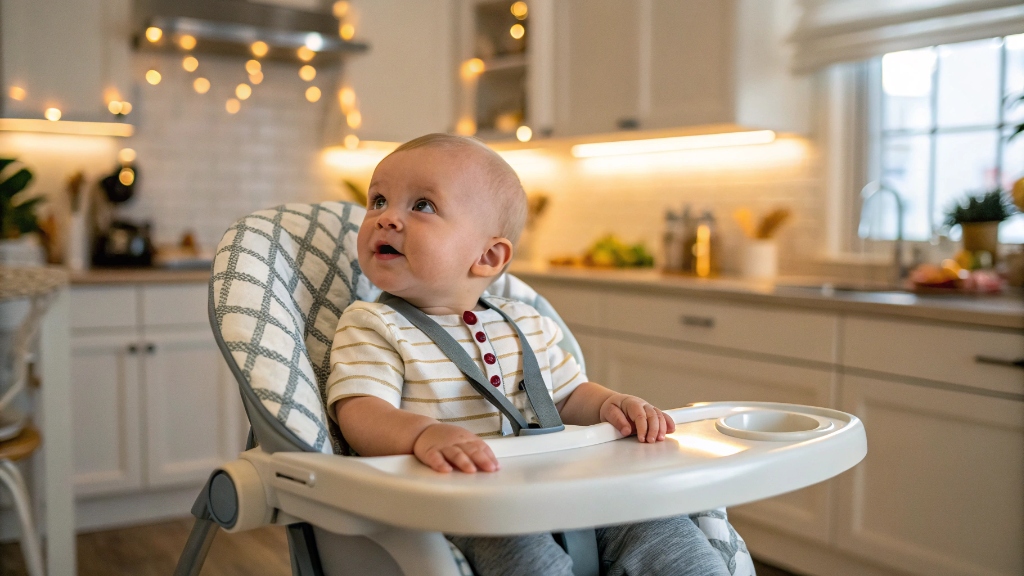
Five months can be too early for a high chair1 if your baby lacks proper head and neck control, cannot sit unassisted, or shows no interest in solid food. Child development experts recommend that babies start using high chairs around 6 months old, once they can sit up independently. Most children will transition out of high chair1s between the ages of 3 and 5, depending on their size, coordination, and comfort..
Understanding these readiness signs is not just about following rules. It is about ensuring your baby’s safety and comfort. Let’s explore what truly matters for high chair readiness.
Are high chairs safe for babies, and how can you tell?
You want your baby to join family meals, but safety is your top concern. Are high chairs truly secure for them? The fear of an accident is always present.
Yes, high chairs are safe for babies when chosen and used correctly. They must have a stable base, a secure 5-point harness, and be free of pinch points or sharp edges. Always ensure the chair meets safety standards and the baby is properly seated and supervised.
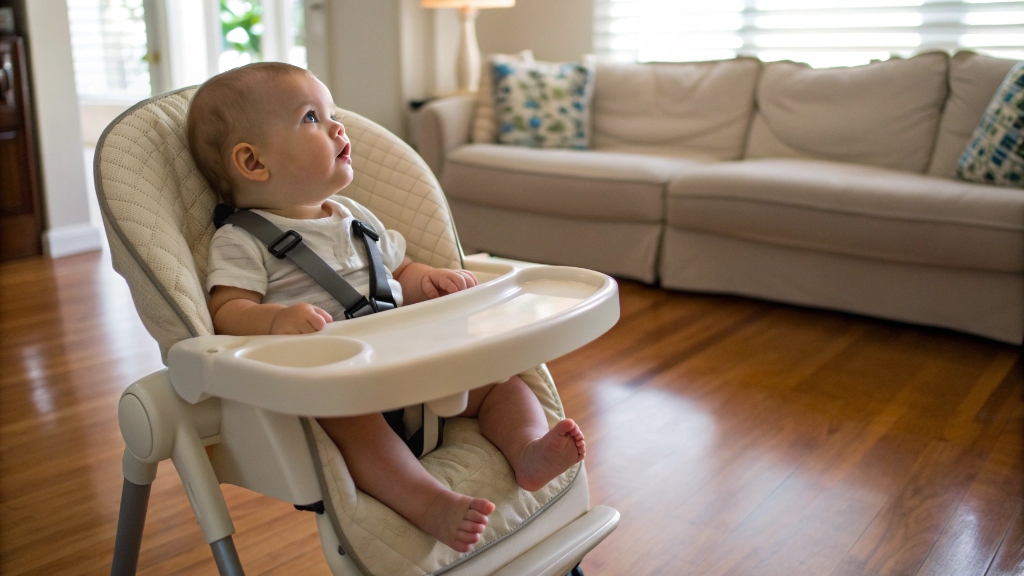
From my experience, seeing countless products, I know that safety in a high chair is not a single feature. It is a combination of design elements working together. First, the stability of the base is crucial. A wide footprint prevents tipping, even when a baby wiggles or pushes on the tray. I always check for a sturdy frame and anti-slip feet. The next critical part is the harness system. A 5-point harness is the gold standard. It secures the baby over the shoulders, around the waist, and between the legs. This prevents them from climbing out or slipping down. I have seen how easily a curious baby can escape a less secure 3-point harness, which can lead to dangerous falls. The material and construction also matter deeply. There must be no sharp edges or rough surfaces that could harm delicate skin. Pay attention to pinch points, especially where the tray attaches or if there are folding mechanisms. These areas must be designed to protect tiny fingers. All materials should be non-toxic, especially if your baby might chew on the tray. It is also important to look for high chairs that meet recognized international safety standards, like EN14988 in Europe or ASTM F404 in the US. These certifications show that the product has been tested rigorously. Ignoring these can lead to chairs that break down quickly or pose hidden hazards. Many of our partner factories prioritize these safety aspects, holding certifications like BSCI and EN1888. They use high-quality, certified materials and designs. This helps us provide products that reduce your worries about safety and compliance, simplifying your purchasing process and ensuring peace of mind for you and your customers.
| Safety Feature | Importance | What to Check For |
|---|---|---|
| Stable Base | Prevents tipping and accidental falls | Wide legs, anti-slip feet, sturdy construction |
| 5-Point Harness | Secures baby, prevents climbing/slipping out | Shoulder, waist, and crotch straps |
| No Pinch Points | Protects tiny fingers from injury | Smooth mechanisms, covered joints |
| Non-Toxic Materials | Safe for oral contact and skin | BPA-free plastics, lead-free paints |
| Easy to Clean | Promotes hygiene, prevents germ buildup | Smooth surfaces, removable tray |
| Certifications | Ensures product meets recognized standards | Look for EN14988, ASTM, or similar marks |
What is the 90-90-90 rule for high chairs, and why does it matter?
You want your baby to eat comfortably and safely. But have you heard about the 90-90-90 rule? Many parents do not know this simple guide for ideal high chair posture.
The 90-90-90 rule for high chairs means a baby’s hips, knees, and ankles should all be at 90-degree angles. This optimal posture promotes comfortable feeding, proper digestion, and improved safety by stabilizing their core. It is vital for successful and safe meal times.
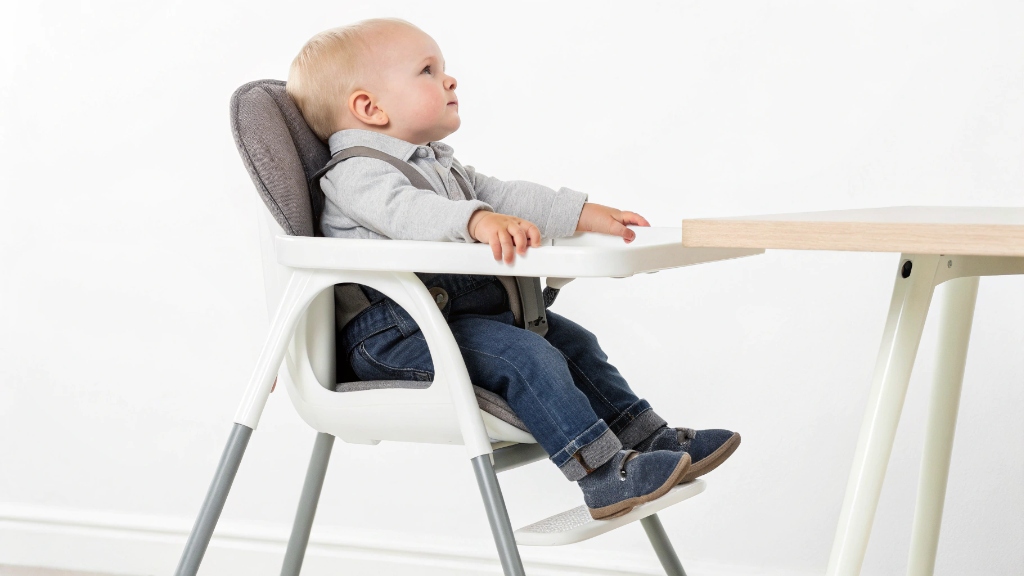
The 90-90-90 rule is a simple but powerful concept for optimal high chair use. It is about how your baby sits. First, the hips: your baby’s hips should be at a 90-degree angle to their torso. They should not be slouching or leaning back too far. This means their back is straight, supported by the chair. Next, the knees: their knees should also form a 90-degree angle, with their thighs parallel to the floor. This stops them from sliding forward. Finally, the ankles: their feet should be flat on a footrest, creating a 90-degree angle at their ankles. Their feet should not dangle. When all three points are at 90 degrees, it creates a stable, supported posture. This stable seating is not just for comfort. It helps significantly with digestion and reduces choking risk because the baby’s airway remains open and clear. When a baby’s feet dangle, they often use their abdominal muscles to stabilize themselves. This can make them tired, distract them from eating, and even make them push back on the tray with their hands for support. A proper footrest allows them to relax and focus on the meal. Many high chairs come with adjustable footrests, which is a key feature to look for. It allows the chair to grow with your child. As an experienced professional in this industry, I have seen how much difference a well-adjusted high chair makes. It improves the feeding experience for both baby and parent. This proper posture encourages independent eating and better self-regulation during mealtimes. Our company’s baby high chairs are designed with adjustable features, including multi-position footrests, to help you achieve this optimal posture effortlessly. This commitment to ergonomic design shows our dedication to providing high-quality children’s products to our global customers.
| 90-90-90 Rule Point | What It Means | Why It Matters | What to Look For in a High Chair |
|---|---|---|---|
| Hips at 90 degrees | Back is straight, supported | Promotes core stability, proper digestion | Ergonomic seat design, back support |
| Knees at 90 degrees | Thighs parallel to the floor | Prevents slouching, aids in comfortable eating | Appropriate seat depth, adjustable tray |
| Ankles at 90 degrees | Feet flat on a footrest | Provides stability, reduces fidgeting | Adjustable footrest, solid and wide enough |
| Overall Posture | Stable, upright, engaged | Improves feeding focus, reduces choking risk | Multiple adjustments for seat height, footrest |
Conclusion
A 5-month-old is ready for a high chair when they sit unsupported. Safe chairs have a stable base and 5-point harness. The 90-90-90 rule ensures optimal feeding posture.