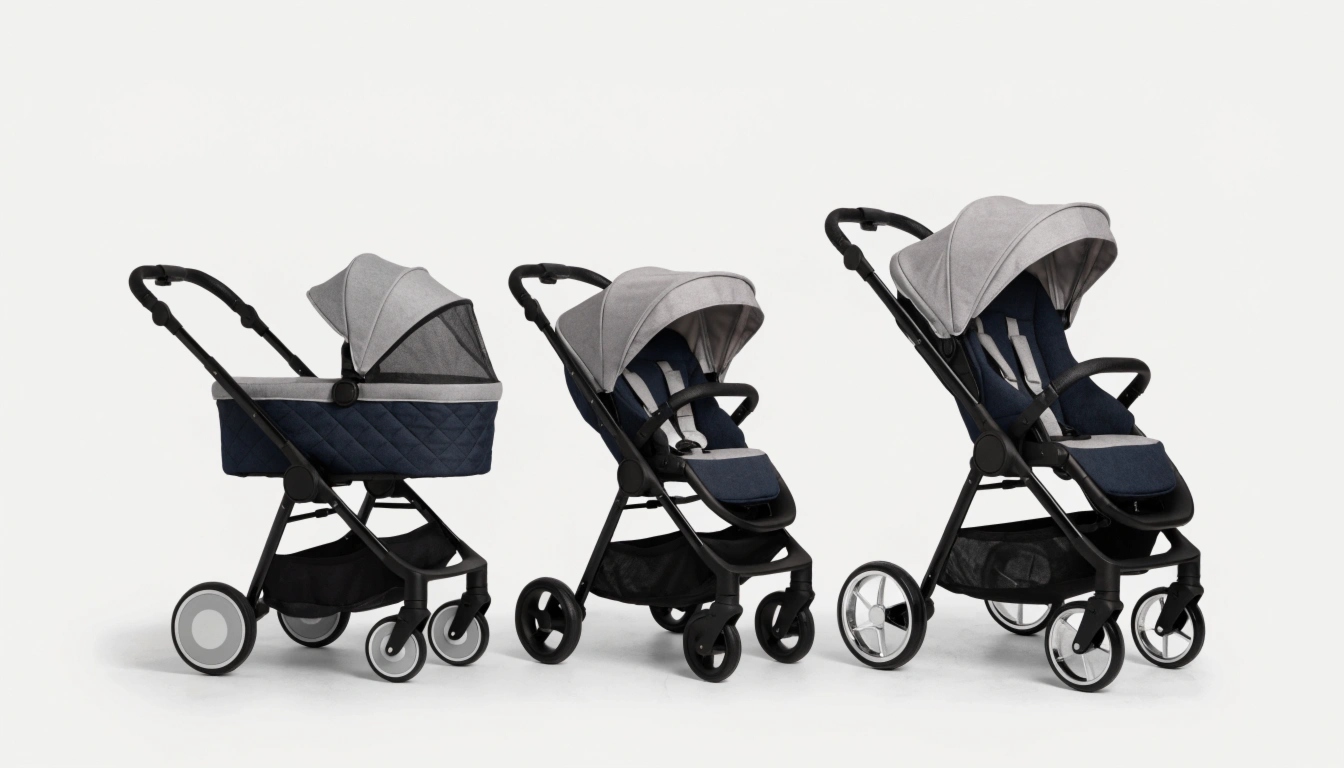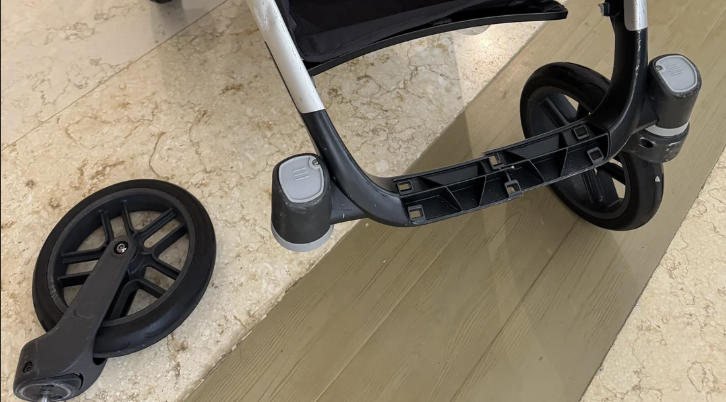
I remember a few years ago, a European buyer came to us with a big push for sustainability. They wanted to incorporate recycled plastics into their new range of baby strollers. It was a great idea, aligned with consumer demand and environmental goals. We found a supplier who promised recycled PP (polypropylene) and PA (polyamide) suitable for baby products, even had a decent certificate for the recycled content. The initial samples looked good, and the numbers for recycled content were impressive. But when we sent the first production batch components for mechanical testing – specifically for fatigue and impact resistance, crucial for stroller wheels and joints – they failed. Repeatedly. The recycled material, despite its certification, simply didn’t have the consistent mechanical properties of virgin material, at least not for those critical, load-bearing parts. It wasn’t just a matter of a weaker batch; it was an inherent variability that made it unreliable for safety-critical components. We had to go back to the drawing board, redesigning some parts for virgin material, and carefully selecting where recycled content could be safely used. This experience taught me that for baby products, "eco-friendly" can never come at the expense of safety, and recycled materials require an entirely different level of scrutiny.
So, is it safe to use recycled materials in strollers and high chairs? The short answer is: potentially, but with extreme caution, rigorous testing, and a deep understanding of the material’s origin and properties. It’s not a simple yes or no. For baby products, safety is paramount. Any material, recycled or virgin, must meet stringent mechanical, physical, and chemical safety standards. Recycled materials introduce additional layers of complexity regarding consistency, potential contaminants, and structural integrity. It requires a much more robust verification process than simply asking for a "recycled" sticker.
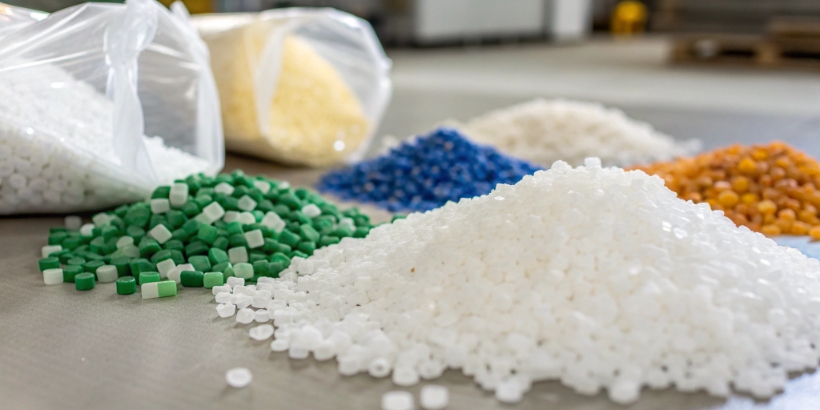
What certifications are available for recycled materials, and what do they actually tell me?
When a factory presents a material as "recycled," my first question isn’t just about the percentage; it’s about the certification behind that claim, and more importantly, what that certification actually means.
The most common certifications you’ll see are the Global Recycled Standard (GRS) and the Recycled Claim Standard (RCS). These are excellent for verifying the recycled content and ensuring chain of custody. They trace the material from its source (e.g., post-consumer waste like plastic bottles, or post-industrial waste from manufacturing scraps) through its collection, processing, and incorporation into the final product. They ensure that when a factory says "30% recycled content," that claim is verifiable.
How I handle this in real business: I always require GRS or RCS certification for any recycled material claimed by a factory. This establishes transparency and accountability for the recycled content. However, I make it absolutely clear to the buyer and the factory that these are content certifications, not safety certifications. They tell us about the material’s origin and percentage, but they do not confirm that the material is safe for baby contact, free of harmful chemicals, or structurally sound for a stroller frame.
Mistakes I saw: Buyers often mistake a GRS certificate for a material safety pass. They assume because it’s "certified recycled," it’s automatically good to go for a toy or a high chair tray. This is a dangerous oversight.
What factories usually hide: Sometimes, they don’t hide anything intentionally, but they might not fully understand the difference themselves. They might proudly present a GRS certificate without realizing that further, much more specific, baby-product-focused chemical and mechanical testing is still critically needed. Or, they might source recycled material from a supplier who says it’s GRS/RCS certified, but the factory hasn’t done their own due diligence to verify it.
How buyers should check:
- Demand GRS/RCS certificates: Request the full certificate, check its validity, and understand the scope (e.g., what percentage is certified, what type of recycled material).
- Verify the supply chain: Ask about the specific recycled material supplier, not just the finished product factory.
- Understand limitations: Clearly differentiate between content claims (GRS/RCS) and safety/performance claims (product standards, chemical tests).
Here’s a comparison to clarify:
| Certification Type | What it verifies | Relevance for Baby Products (Safety) |
|---|---|---|
| GRS/RCS | Recycled content percentage, chain of custody | Traceability, Environmental Claim Support |
| EN 71-3, REACH, CPSIA | Chemical safety (heavy metals, phthalates, SVHCs) | Direct Product Safety (crucial for baby products) |
| EN 1888, ASTM F833 | Mechanical performance, structural safety | Direct Product Safety (crucial for baby products) |

Is it true that recycled materials might compromise strength and introduce more chemicals in baby products?
Yes, unfortunately, these are very real and valid concerns when it comes to using recycled materials, especially in products for infants and toddlers. My experience confirms that these are not just theoretical worries.
Regarding quality and strength:
Recycled plastics, particularly post-consumer recycled (PCR) materials, can have degraded mechanical properties compared to virgin plastics. Each time plastic is melted and reformed, its polymer chains can shorten, reducing its strength, elasticity, and impact resistance. The feedstock for PCR is also diverse, meaning inconsistent material quality. For structural components in a stroller or high chair – like frame parts, connectors, or wheel hubs – this inconsistency and potential reduction in strength is a major red flag. A joint that snaps, a wheel that cracks, or a frame that buckles could lead to severe injury.
How I handle this: For any critical, load-bearing parts, I am extremely hesitant to approve recycled materials. If a buyer insists, I demand extensive mechanical testing specific to the recycled material and the final product’s application. This includes fatigue testing, impact testing at various temperatures, static load tests, and drop tests, often with higher safety factors than for virgin materials. We also look at the consistency of batches.
Regarding chemicals:
This is perhaps the biggest concern for baby products. Recycled plastics can be made from a mix of different plastic types and, crucially, can contain legacy chemicals that were present in the original product but are now banned or restricted for use in new children’s products. Think about old electronic casings or packaging that might have contained heavy metals, phthalates, BPA, or flame retardants that are no longer permissible in infant products. The recycling process doesn’t always remove these contaminants, and they can leach out over time or through wear and tear.
How I handle this: For any recycled material, especially PCR, I insist on comprehensive chemical testing, far beyond what might be required for virgin material. This includes:
- Heavy metals (Lead, Cadmium, Mercury, etc.)
- Phthalates
- BPA
- Formaldehyde
- SVHCs (Substances of Very High Concern) under REACH
- Even additional screening for unexpected contaminants.
We treat recycled material with an assumption of "guilty until proven innocent" when it comes to chemicals.
Mistakes I saw: Buyers and even some factories assuming that if a recycled material "looks clean," it is. Or that standard chemical tests for virgin material are sufficient. They’re often not.
What factories usually hide: They might not intentionally hide these risks, but they might be unaware of the full chemical profile of their recycled feedstock or the potential for mechanical degradation. The recycled material supplier might not provide full disclosure on the origin of the recycled content, making it impossible to predict potential contaminants.
How buyers should check:
- Material Data Sheets (MDS): Demand comprehensive MDS for the specific recycled material, detailing its exact composition, melt flow index, tensile strength, impact strength, etc.
- Independent Lab Testing: Do not rely solely on the factory’s or material supplier’s test reports. Commission independent, accredited labs to perform both mechanical and chemical tests on every batch of recycled material before it’s used in production.
- Application-Specific Design: Work with your factory’s engineers to determine if recycled material is truly suitable for the intended part, or if it needs to be limited to non-critical, non-load-bearing components (e.g., non-contact accessory parts, packaging inserts).
How we actually help buyers reduce these risks
At Anhui Windmill, when a buyer expresses interest in using recycled materials for baby products, we approach it with a "safety-first, sustainability-second-but-close-second" mindset.
Firstly, we engage in a thorough risk assessment for every component where recycled material is proposed. We differentiate between structural, load-bearing parts (e.g., stroller frames, high chair legs) where we strongly advise against recycled content or demand extremely stringent verification, and non-critical components (e.g., storage baskets, wheel covers, certain textile components) where it might be more feasible.
We demand full transparency and traceability. This means requiring GRS or RCS certification for the recycled content and delving deep into the material supplier’s chain of custody. We insist on understanding the source of the recycled material – is it post-industrial waste that is very consistent, or post-consumer waste with a more varied history?
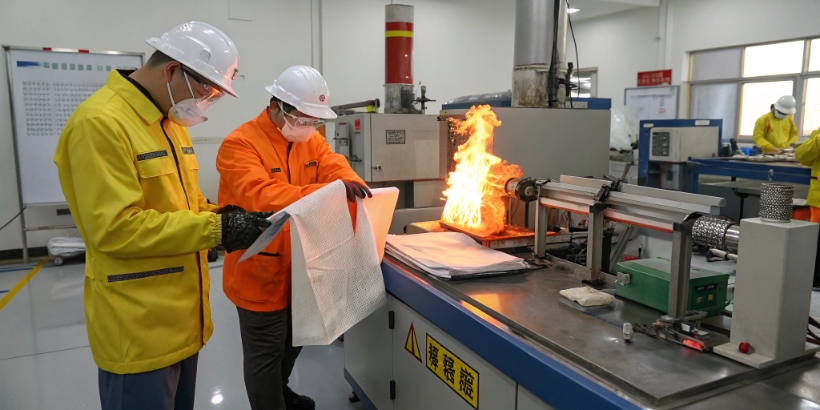
Crucially, we mandate pre-production material testing for every batch of recycled material intended for your product. This isn’t just a one-time test for the initial sample. We work with trusted, independent third-party laboratories to perform comprehensive mechanical tests (tensile strength, impact, fatigue) and an expanded battery of chemical tests (heavy metals, phthalates, BPA, SVHCs, etc.) that go beyond typical virgin material requirements. We do this to ensure no harmful legacy chemicals are present and that the material’s integrity meets the demands of baby product safety standards.
We work closely with the factory’s R&D and QC teams, guiding them on appropriate applications, processing parameters, and rigorous in-house quality checks for recycled content. Our long-term relationships with these factories mean they trust our judgment and understand our non-negotiable stance on safety. We’re on the ground, conducting spot checks and verifying these processes are followed, ensuring that the desire for sustainability doesn’t compromise the safety and reliability that your baby product demands.
Conclusion
Using recycled materials in baby products is a noble goal, aligning with global efforts for a more sustainable future. However, it’s a journey that must be undertaken with extreme diligence and a deep understanding of the inherent risks. For products designed for the most vulnerable users, safety can never be compromised. By working with an experienced partner who understands the nuances of material science, regulatory compliance, and factory capabilities, you can navigate these complexities, integrate recycled content responsibly, and ensure your baby products remain both safe and sustainable.