I still remember one shipment that almost got blocked at a European supermarket warehouse.
The stroller had passed EN 1888 mechanical tests.
Frame was strong. Brakes worked. Harness looked fine.
But the buyer received a call from compliance.
The fabric flammability test did not match the production fabric.
At that time, I already had two children.
And I clearly remembered how close stroller fabric is to heaters, café smoking areas, and even open kitchens in small apartments.
That incident taught me something very early in my career:
Stroller fabric flammability is rarely a design problem.
It is almost always a sourcing and control problem.
Direct Answer: What buyers really need to know
| Market | Mandatory Reference | What Is Actually Checked | Buyer Risk |
|---|---|---|---|
| EU | EN 1888 | Ignition & flame spread of accessible textiles | Market withdrawal |
| USA | ASTM F833 + 16 CFR 1610 | Class 1 flammability only | CPSC recall |
| Supermarkets | Internal specs | Often stricter than law | Delisting / chargeback |
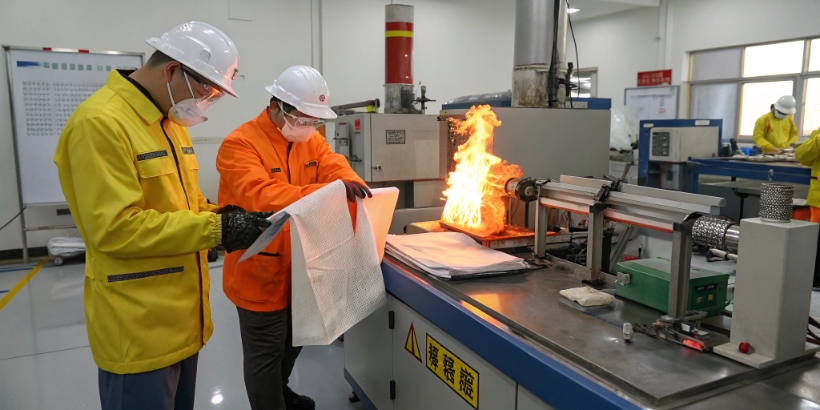
How Does EN 1888 Control Stroller Fabric Flammability in Real Factory Production?
Many buyers misunderstand EN 1888.
They think it is only about wheels, brakes, and stability.
In real factory audits, I see the opposite problem: fabric risks are ignored until the last step.
EN 1888 requires that child-accessible textile components do not present unreasonable fire risk.
This includes:
- Seat fabric
- Padding
- Canopy
- Any textile the child can touch
What usually goes wrong is not the test itself, but when and how the test is done.
From my experience, factories often:
- Test one fabric color only
- Test fabric without foam backing
- Change fabric mills after price negotiation
- Reuse reports from earlier models
Here is the uncomfortable truth for buyers:
EN 1888 testing is valid only for the exact material combination tested.
| Factory Shortcut | Buyer Consequence |
|---|---|
| Color not retested | Market surveillance failure |
| Foam excluded | Different burn behavior |
| Fabric mill changed | Report becomes invalid |
This is why EN 1888 compliance must be managed at sourcing stage, not after samples are approved.
If you are also reviewing overall stroller safety systems, this connects directly with
👉 How to Evaluate Stroller Frame Strength and Stability
What Does the U.S. 16 CFR 1610 Flammability Rule Mean for Stroller Buyers?
The U.S. system is simpler on paper—and more dangerous in practice.
ASTM F833 refers stroller fabric flammability to 16 CFR 1610, which classifies textiles into:
- Class 1 – acceptable
- Class 2 – restricted
- Class 3 – prohibited
For strollers, only Class 1 is allowed.
What factories rarely explain:
- Dark colors burn faster
- Coatings change ignition time
- Foam backing changes results
- Different labs give different outcomes
I have handled cases where:
- The same fabric passed one lab
- Failed another
- Resulted in forced CPSC recall
That is why U.S. buyers must always confirm:
- Final production fabric equals tested fabric
- All colorways are covered
- Foam and coatings are included in testing
| Buyer Check | Why It Matters |
|---|---|
| BOM match | Prevents report mismatch |
| Color control | Avoids re-test failure |
| Lab credibility | CPSC enforcement risk |
If returns after launch are a concern, this ties closely to
👉 How to Reduce Stroller Returns After Launch
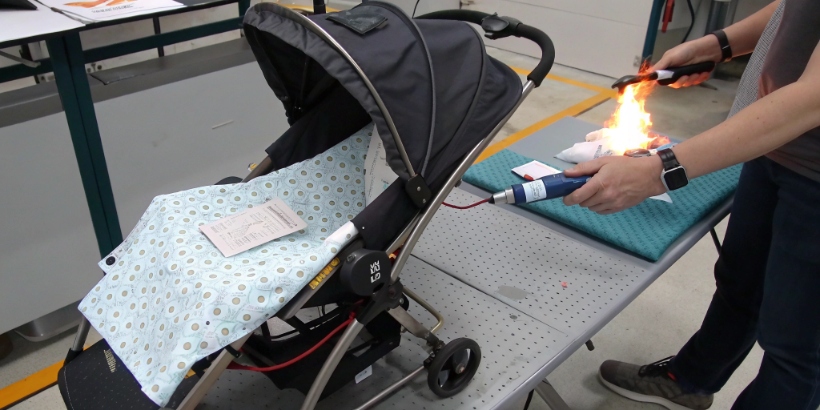
Why Fabric Flammability Is a Hidden Risk for Supermarket Buyers
Supermarket buyers face higher exposure than brands.
From my export experience:
- Volume is high
- Margin is thin
- One recall wipes out profit
The most common mistake I see:
Buyers trust the factory’s existing report without locking the supply chain.
Factories may:
- Switch fabric mills quietly
- Accept cheaper substitute fabrics
- Use leftover stock not covered by reports
Flammability failures usually appear:
- During market surveillance
- After customer complaints
- Or after an incident
And by then, it is too late.
This is why flammability control must be linked with:
- Factory audits
- Material approval
- Ongoing production monitoring
If you are reviewing factories, this naturally connects with
👉 Stroller Factory Audit Checklist (BSCI vs SMETA vs ISO)
How We Actually Help Buyers Control This Risk
At Anhui Windmill, we treat fabric flammability as a supply-chain control issue, not a lab issue.
In real projects, we:
- Lock fabric mills before sampling
- Test final fabric + foam + coating
- Retest after any color or supplier change
- Align EN and ASTM requirements early for multi-market SKUs
This approach has helped buyers avoid recalls before containers ship, not after problems appear.
Conclusion
Stroller fabric flammability is quiet.
It does not fail in obvious ways.
But when it fails, it damages brands fast.
From my experience as a parent of two children and an export manager,
buyers who control materials early avoid the most expensive mistakes later.
Article edited by Sherry on January 17, 2026
This article is part of our Baby Stroller Safety & Selection Hub, where I explain how buyers can reduce risk and avoid recalls.