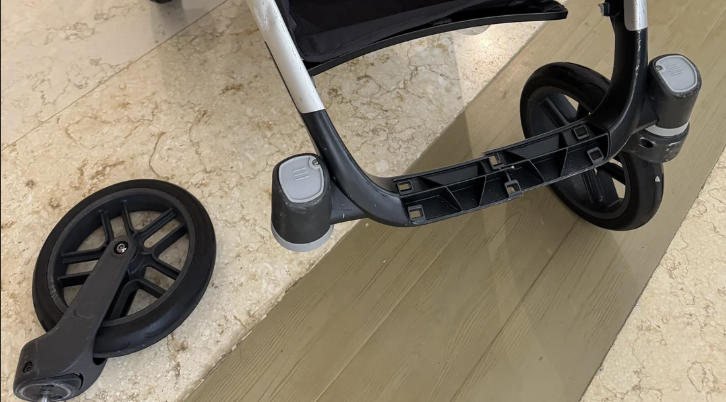
I once had a very promising project with a new buyer for a line of lightweight travel strollers. Everything seemed to be going smoothly. The factory provided impressive test reports for EN 1888, showing their prototype had passed all the necessary safety tests. We moved to production, feeling confident. Then, during our final pre-shipment inspection, our QC team found a problem: the brakes on a significant portion of the production batch weren’t engaging reliably. When we dug into it, it turned out a minor change in a sub-supplier for a small plastic part in the braking mechanism, not reflected in the original test report, had compromised the safety. The factory had assumed the new part was "good enough" because it looked similar. We had to hold the entire shipment, re-engineer the part, and re-test. It was a costly delay, and it showed me again that simply looking at a piece of paper isn’t enough when it comes to baby product safety. You have to understand what’s behind that paper, and how deeply safety is embedded in the factory’s daily operations.
Checking stroller safety compliance before buying isn’t just about ticking boxes; it’s about protecting children, your brand reputation, and your business. It’s a complex process because safety isn’t a static concept—it involves design, materials, manufacturing processes, and ongoing quality control, all benchmarked against specific regional standards. Relying solely on a factory’s word or a single test report is a gamble you absolutely cannot afford with baby products. You need to build a robust system for verification that spans from initial design review to final pre-shipment checks.
What specific safety standards should I be looking for, and how do I verify them?
The safety standards for strollers are region-specific and quite detailed. Knowing which ones apply to your target market is the first critical step.
How I handle this in real business: When a buyer comes to us, my first question after "What kind of stroller?" is always "Which market are you selling into?"
- For Europe, the primary standard is EN 1888 (Parts 1 & 2). This covers everything from stability and structural integrity to braking, harnesses, and entrapment points.
- For North America (USA and Canada), it’s ASTM F833.
- For Australia and New Zealand, it’s AS/NZS 2088.
Sometimes, markets might have additional local requirements or specific chemical safety laws.
Once we know the standard, we review the factory’s existing documentation. We look for third-party test reports (not just internal factory reports) from an internationally accredited lab (like SGS, Intertek, TUV, Bureau Veritas). These reports must be:
- Recent: Not older than 1-2 years, ideally for the exact model you’re buying.
- Specific: Clearly identify the product model, factory name, and the specific standard tested against.
- Comprehensive: Cover all required clauses of the standard. A factory might pass one part of EN 1888 but fail another.
Mistakes I saw:
- Outdated reports: Buyers accepting reports from five years ago, not realizing materials or designs might have changed.
- Irrelevant reports: A factory showing a test report for a completely different stroller model, or even a different product category.
- Partial testing: A factory only testing for "structural integrity" and ignoring critical areas like harness strength or stability.
- Internal reports: Relying on the factory’s own lab reports without third-party verification. While factories have internal labs for R&D, compliance often requires external validation.
What factories usually hide: They might not volunteer that their test report is for a slightly different model or an older version. They might only test what they think is relevant, not the full scope of the standard. Sometimes, the original testing was done on a "golden sample" that was perfectly built, but production units might not meet the same quality.
How buyers should check:
- State your target market and required standards explicitly.
- Demand third-party test reports from accredited labs. Verify the lab’s accreditation.
- Cross-reference reports: Ensure the model number, factory name, and date on the report match your order and current production.
- Request a full technical file: This should include not just the test report, but design drawings, material specifications, and a Declaration of Conformity (DoC).
| Standard | Target Market | Key Areas of Focus | Verification Method |
|---|---|---|---|
| EN 1888-1 & 2 | European Union | Stability, Braking, Harness, Entrapment, Durability | Accredited 3rd-party lab reports (recent & specific) |
| ASTM F833 | USA, Canada | Structural Integrity, Braking, Wheels, Safety Harnesses | Accredited 3rd-party lab reports (recent & specific) |
| AS/NZS 2088 | Australia, New Zealand | Stability, Strength, Restraint Systems, Product Markings | Accredited 3rd-party lab reports (recent & specific) |
How reliable are factory in-house test reports, and do I need third-party lab testing?
This is a question I get all the time, and the answer is nuanced but clear: always prioritize independent, third-party lab testing for final compliance.
How I handle this in real business: Factories often have impressive in-house testing facilities. They’ll show you videos of their machines running durability cycles, brake tests, and stability tests. This is great for their R&D and internal quality control, and I encourage it. It shows they’re actively trying to build a safe product. However, for actual compliance documentation, especially for export, I always insist on third-party lab testing.
Why? Because an independent, accredited lab provides an unbiased assessment. They have no vested interest in the outcome, and their procedures are subject to strict international standards (like ISO/IEC 17025 for lab competence). Their reports carry weight with customs authorities and consumer safety bodies worldwide. We typically budget for initial type testing by a third party for the prototype, and then periodic re-testing (e.g., annually, or if design/material changes) to ensure ongoing compliance.
Mistakes I saw:
- Blind trust: Buyers accepting a factory’s internal test reports as definitive proof of compliance. These reports might use less stringent methods, have less accurate equipment, or simply lack the accreditation required for legal compliance.
- Cost cutting: A factory might push back on third-party testing due to cost, suggesting their internal tests are enough. This is a red flag.
- "Witness testing" confusion: Some buyers confuse witnessing a factory’s internal test with a third-party lab performing the test. They are not the same.
What factories usually hide:
- The exact calibration status of their internal testing equipment.
- The full extent of their staff’s training in compliance testing procedures.
- Any past instances where their internal tests differed significantly from subsequent third-party tests.
How buyers should check:
- Demand accredited lab reports: Specify which internationally recognized labs you prefer.
- Request raw data (if possible): For complex issues, a lab might provide raw data alongside the summary report.
- Plan for periodic re-testing: Even if the initial model passes, component changes or subtle manufacturing shifts can affect safety.
- Consider pre-shipment third-party lab spot checks: For high-volume orders, a random sample from a production batch can be sent for a quick confirmation test of critical clauses.
Beyond test reports, what else should I check about a factory’s safety culture and quality control?
A test report is a snapshot. What you really need to understand is the continuous commitment to safety woven into the factory’s day-to-day operations. This comes down to their quality management system and culture.
How I handle this in real business: This is where factory audits become invaluable. We look beyond just the test reports to assess the factory’s overall capability and commitment.
- Quality Management System (QMS): We check for ISO 9001 certification, which indicates a structured approach to quality management. We want to see their SOPs (Standard Operating Procedures) for production, quality control, and corrective actions.
- Safety in Design Review: Does the factory have a process for reviewing new designs against safety standards before prototyping? Are potential hazards identified and mitigated early?
- Incoming Material Inspection: Do they check raw materials and components (plastics, metals, fabrics) for quality and, importantly, chemical compliance (e.g., REACH, RoHS, if applicable, as we discussed previously)? My previous experience taught me how a tiny material change can cause big problems.
- In-line and Final Inspection: We audit their QC checkpoints throughout the production line. Are there checks for brake function, harness assembly, and folding mechanism integrity? Are these checks documented? What happens if a defect is found?
- Traceability: Can they trace components back to their suppliers? This is crucial for recalls or identifying sources of defects.
- Staff Training: Are assembly workers and QC staff trained on safety-critical aspects?
Mistakes I saw:
- Ignoring the human element: Focusing only on machines and processes, not on whether staff understand why safety is critical.
- Paper-only QMS: A factory having an ISO certificate but not actually following their documented procedures on the shop floor.
- Lack of corrective action: Identifying defects but not having a robust system to prevent recurrence.
- Poor supplier management: The factory blindly trusting its sub-suppliers for critical safety components without their own incoming checks.
What factories usually hide:
- The frequency of internal quality failures or rework.
- The actual effectiveness of their corrective and preventive action (CAPA) system.
- The level of training for their lowest-tier assembly line workers regarding safety.
- Their true relationship and vetting process for sub-component suppliers.
How buyers should check:
- Conduct comprehensive factory audits: Beyond social audits (like BSCI, SMETA), perform a Quality Management System (QMS) audit focusing specifically on safety.
- Walk the production line: Pay attention to visible QC checks, worker training, and material handling. Ask workers how they check for safety issues.
- Review their internal QC documents: Ask to see inspection reports, defect logs, and CAPA records for similar products.
- Ask for material declarations and supplier lists: For critical components, ask for information on their suppliers and how they verify their incoming materials.
How we actually help buyers reduce these risks
At Anhui Windmill, we don’t just find you a factory; we embed ourselves in the safety compliance process from the very start. When you’re looking for a stroller, we first help you define the exact safety standards for your target market. Then, we vet factories not just on their production capability but, crucially, on their demonstrable commitment to safety.
We demand comprehensive, recent third-party lab test reports for EN 1888, ASTM F833, or AS/NZS 2088, ensuring the reports match your specific product and current production. But we don’t stop at the paper. Our experienced engineers conduct detailed factory audits, assessing their Quality Management System (QMS), inbound material checks, in-line QC points, and their process for managing sub-suppliers of critical safety components. We look for ISO 9001 certification and go beyond it to verify that their safety culture is alive on the factory floor, not just in a binder.
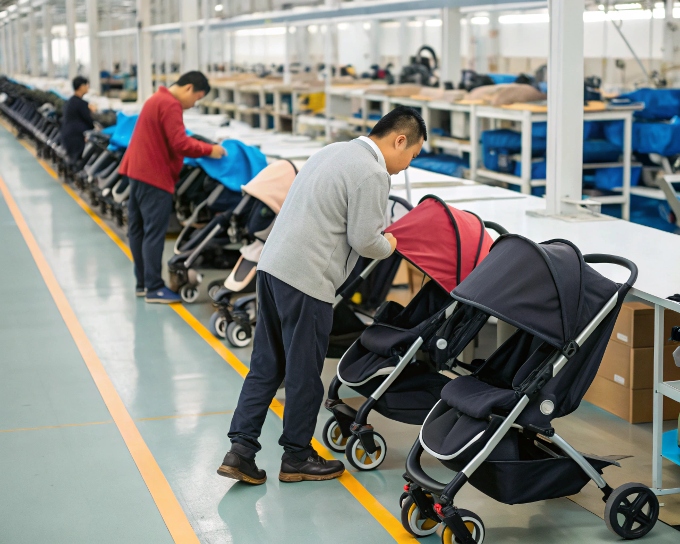
During production, our dedicated QC team performs vigilant pre-production, in-line, and final inspections. This includes checking for correct assembly of harnesses, functional brakes, stability, and adherence to design specifications that impact safety. If any deviation is found, we immediately trigger a corrective action process with the factory, ensuring issues are resolved and prevented from recurring. By doing this rigorous, hands-on work at every stage, we remove the guesswork and help ensure the strollers you buy are genuinely safe and compliant.
Conclusion
Ensuring stroller safety compliance before buying is an involved but absolutely critical process. It’s not enough to simply ask for a "safe" stroller or rely on a single document. You need a deep understanding of the relevant standards, a commitment to rigorous third-party testing, and a thorough verification of the factory’s safety culture and quality control systems. By taking a proactive, detailed approach, you protect both the children who will use your products and the reputation of your brand. With baby products, there’s no room for compromise on safety.