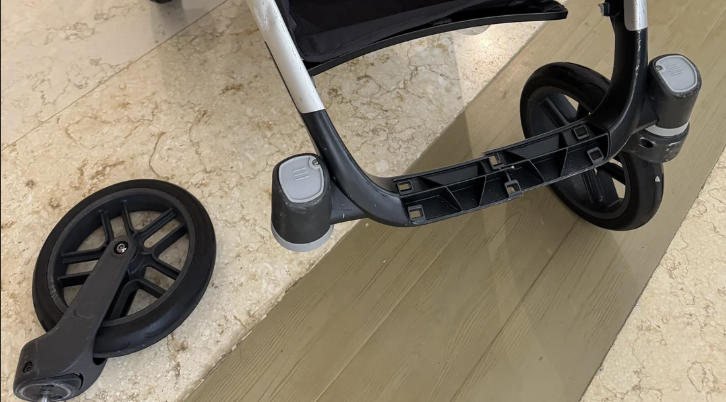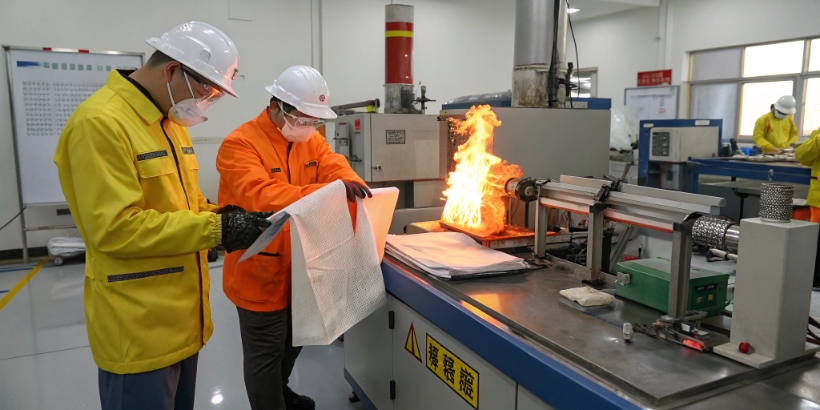
I once worked with a factory, a newer outfit, that had a promising sample for a baby stroller. Their price was good, the engineering looked solid on paper, and they assured me they followed "best practices." But when we moved to pilot production, things started to get shaky. The color of the plastic components wasn’t consistent between batches. Some hardware pieces were missing from assembly kits, while others had duplicates. When I asked for the root cause analysis, they had vague answers. Their "quality control" was essentially a final visual check, not a system. There were no clear work instructions posted, no calibration records for their measuring tools, and their incoming material inspection was just a quick glance. We ended up having significant delays and quality issues because they lacked a structured approach. It was a chaotic experience, and it hammered home for me: a nice sample and good intentions aren’t enough. For baby products, you need a system, and for me, that often means ISO 9001.
Now, ISO 9001 isn’t a silver bullet. A certificate on the wall doesn’t automatically mean perfect quality. I’ve seen plenty of factories with ISO 9001 that still cut corners. But what it does represent, when properly implemented, is a commitment to a consistent quality management system (QMS). It’s a framework that dictates how a factory operates, from design and development to production, inspection, and even how they handle customer complaints. For baby products – strollers, high chairs, tricycles, scooters – where safety, durability, and consistency are non-negotiable, having a factory with an ISO 9001 certified QMS means they should have the processes in place to reliably deliver what you need, batch after batch. It’s about reducing variability and building in quality, not just checking for it at the end.
What specific aspects of ISO 9001 are most important for ensuring baby product quality and safety?
When I look at an ISO 9001 certified factory for baby products, I don’t just see the certificate. I mentally break down the standard into the areas that directly impact what we produce. The most critical aspects for me are:
- Process Control: This is huge. It means having documented procedures for every step – injection molding, fabric cutting, assembly, painting, welding. For baby products, these procedures need to specify critical parameters like torque settings for screws, adhesive curing times, or specific welding techniques.
- Documentation and Record Keeping: This is the backbone of traceability. Who did what? When? Which batch of material was used? If there’s a problem, we need to trace it back. For baby products, being able to trace a defective part back to its material batch or even the specific machine and operator is crucial for limiting recalls.
- Non-conformity Management and Corrective Actions: Things will go wrong. ISO 9001 requires a system to identify defects, quarantine non-conforming products, investigate the root cause, and implement actions to prevent recurrence. This isn’t just about fixing the immediate problem; it’s about learning from mistakes.
- Measurement and Calibration: All tools that affect product quality – calipers, torque wrenches, scales, thermometers – must be calibrated regularly. If a factory’s measuring equipment isn’t accurate, how can they guarantee parts meet tight tolerances for baby products?
- Management Review and Continuous Improvement: A good QMS isn’t static. ISO 9001 demands that management regularly reviews the system’s effectiveness and looks for ways to improve it. This proactive approach helps keep quality standards high over time.
Mistakes I saw: Buyers often think "ISO 9001 = no defects." That’s a dangerous assumption. ISO 9001 means they have a system to manage quality, not that they never have defects. The mistake is not then verifying the effectiveness of that system.
What factories usually hide: Sometimes, they hide the real frequency of non-conformities, or that their corrective actions are superficial and don’t address root causes. The procedures might be written beautifully, but are they actually followed on the shop floor, or do workers just do what they’ve always done?
How buyers should check: Ask for examples of their non-conformity reports and corrective action plans for past issues. Ask to see their calibration log for key equipment. During factory visits, observe if employees actually follow the posted work instructions. Ask for traceability records for a random finished product.
Here’s a look at how ISO 9001 elements compare to direct product checks:
| ISO 9001 QMS Element | Impact on Baby Products | Direct Product Standard Check (e.g., EN, ASTM) |
|---|---|---|
| Process Control | Consistent assembly, material mixing, finishing | Product function tests, structural integrity tests |
| Documented Procedures | Clear steps for critical tasks (e.g., fastener torque) | Helps ensure consistency, but not a direct product test |
| Non-conformity Management | Identifies and fixes internal flaws, reduces waste | Product failure analysis after testing |
| Measurement Calibration | Accurate dimensions, material properties | Dimensional checks, material composition verification |
| Training & Competence | Skilled workers, proper handling | Reduces errors leading to failed product tests |

Does ISO 9001 replace the need for specific product certifications (e.g., EN, ASTM, AS/NZS) for baby products?
Absolutely not. This is a common misconception, and it’s a critical point to understand for any baby product buyer. ISO 9001 is about the system of quality management – how a factory consistently produces goods. Product-specific certifications (like EN 1888 for strollers, ASTM F833 for car seats, or AS/NZS 2088 for baby carriers) are about the product itself meeting specific safety and performance requirements for a given market.
My approach: I treat them as complementary, not interchangeable. ISO 9001 ensures the factory has a robust framework to achieve those product certifications consistently. The product certifications prove the final item is safe and compliant to use in a particular region. You need both.
The risk: If you rely solely on ISO 9001, you’re missing the direct evidence that the product design and materials meet critical safety standards. A factory could have a perfect ISO 9001 system but still produce a stroller that fails a stability test because of a poor design choice or inadequate material specification – issues that product standards directly address. This is a huge liability for baby products.
Factory reality: Some factories, especially those less experienced with international trade, might imply that their ISO 9001 certificate means their products are "certified for export." This is misleading. While an ISO 9001 system should help them produce compliant products, it doesn’t certify the products themselves.
Compliance logic: Your brand is responsible for ensuring the baby product sold in a market meets that market’s regulations. ISO 9001 helps the factory consistently build it, but independent lab testing against the relevant product standard is what ultimately proves your product meets legal requirements. The cost of a non-compliant product recall for a baby item is astronomically higher than the combined cost of ISO 9001 implementation and product certification.
How can I verify that a factory isn’t just "paper ISO 9001" but truly implements its quality management system?
This is the real trick, and it’s where my long years of factory experience come into play. A "paper ISO 9001" factory is one that has all the binders, flowcharts, and procedures written down, but in daily operation, they are ignored.
How I check:
- Go beyond the auditor’s report: While the external audit report is a good start, I don’t stop there. I check the registrar (who issued the certificate) and its accreditation. Then, my team conducts our own internal, focused audits.
- Observe the shop floor: I look for subtle cues. Are work instructions visibly posted and actually being followed? Do workers seem trained and confident in their tasks? Are measuring tools readily available and stored properly? Is there a designated area for non-conforming materials?
- Ask for records, then verify: I ask for specific records: material receiving inspections, in-process inspection reports, final QC reports, calibration records, training logs, customer complaint logs, and most importantly, corrective and preventive action (CAPA) reports. Then, I cross-reference. If a CAPA was issued for a specific problem, I want to see evidence that the action was taken and was effective.
- Traceability Exercise: I’ll pick a random finished product on the line and ask them to show me all the associated records – from raw materials (who supplied the plastic, where did the fabric come from?) to assembly steps, quality checks, and packaging. This quickly reveals holes in their system.
- Talk to people (informally): Sometimes, a casual chat with a line supervisor or a QC inspector can reveal more about the actual quality culture than any formal meeting. Do they understand their role in quality? Do they feel empowered to stop the line if there’s a problem?
Mistakes I saw buyers make: They look at the certificate, maybe do a quick tour, and assume all is well. They don’t dig into the records or ask the hard questions about how problems are actually handled.
What factories usually hide: The biggest gap is between the documented process and the practiced process. They might also downplay the frequency of internal quality issues or the effectiveness of their solutions.
How we actually help buyers reduce these risks
At Anhui Windmill, we don’t just ask for an ISO 9001 certificate. We treat it as the bare minimum entry requirement. My team and I understand that for baby products, quality isn’t just a buzzword – it’s safety, trust, and brand reputation.
First, we thoroughly vet any potential factory’s ISO 9001 certification, confirming its validity and scope with the certifying body. Then, before any order is placed, we conduct our own on-site quality system audit. This isn’t just a checklist exercise; it’s a deep dive into the factory’s actual implementation of its QMS, especially focusing on those critical points for baby products: material traceability, process controls for specific manufacturing steps (like welding for frames or stitching for fabric components), calibration practices, and their non-conformity management.
We’re particularly skilled at identifying "paper systems" versus truly embedded quality cultures. We interview staff, review real production records, and observe daily operations to ensure that the written procedures are actually being followed. If we find gaps, we work with the factory to strengthen their system. Our goal isn’t just to find fault but to build a robust, reliable supply chain for you. By combining the foundational structure of ISO 9001 with our hands-on factory experience and rigorous oversight, we help ensure your baby products are manufactured with the highest possible consistency and safety standards.
Conclusion
For baby products, quality isn’t a luxury; it’s an absolute necessity. While ISO 9001 isn’t the only piece of the puzzle, a well-implemented quality management system is fundamental. It means a factory has committed to structured processes, control, and continuous improvement – vital traits for anyone making items for our most vulnerable consumers. Combine that foundation with product-specific testing and an experienced partner on the ground like Anhui Windmill, and you’re building a supply chain you can truly trust.