At first, high chairs feel essential. They keep babies safe, contained, and at the right height for feeding. But many parents suddenly realize one day that their child no longer wants to sit in it. I remember this moment clearly with my own son.
Most children should stop using a high chair between 2.5 and 3.5 years old, depending on age, weight, physical control, and behavior. Safety risks increase once children try to climb out or exceed design limits.
| Factor | Typical Limit | Why It Matters |
|---|---|---|
| Age | 2.5–3.5 years | Coordination and independence increase |
| Child weight | 33–40 lbs (15–18 kg) | Structural and tipping risk |
| Behavior | Climbs or resists straps | Fall and injury risk |
| Posture | Feet dangling | Poor stability and comfort |
Article updated: January 17, 2026

When my son was close to 3 years old, he made it very clear he did not want to sit in his high chair anymore. He wanted to climb in and out by himself. That was my first real signal that the high chair stage was ending.
Why Age Alone Is Not the Right Signal
Many parents ask for a fixed age. In reality, age is only a reference, not the decision point.
Children develop balance, strength, and independence at different speeds, which directly affects high chair safety.
Some 2.5-year-olds still sit calmly. Some 3-year-olds already climb like little athletes. This difference changes risk completely.
From a safety point of view, behavior matters more than age.
What Are the Real Safety Risks of Using a High Chair Too Long?
High chairs are designed for contained sitting, not for climbing or standing.
Once a child starts to:
- Push against the tray
- Stand on the footrest
- Lean sideways
- Resist the harness
the product is being used outside its safe design range.
| Risk | Why It Increases After Age 3 |
|---|---|
| Tipping | Higher center of gravity |
| Falls | Climbing behavior |
| Harness failure | Straps not used correctly |
| Structural stress | Exceeding load limits |
Many high chair recalls and accidents happen after the recommended age, not during infancy.
Weight Limits Matter More Than Parents Realize
Most standard high chairs are designed for:
- Maximum child weight: 33–40 lbs (15–18 kg)
This limit includes:
- Child weight
- Movement force
- Dynamic load when pushing or standing
Even if a child fits physically, exceeding weight limits increases tipping and frame stress.
From a sourcing and compliance perspective, this is one of the most common misuse scenarios.
Behavioral Signs It Is Time to Stop Using a High Chair
This is the checklist I personally use and also recommend to buyers and parents.
If two or more signs appear, the high chair should be phased out.
| Sign | What It Means |
|---|---|
| Child tries to climb out | Loss of containment safety |
| Refuses harness | High fall risk |
| Feet no longer supported | Poor posture |
| Pushes table or tray | Tip-over risk |
| Wants independence | Ready for next stage |
In our case, my son did not fail the chair physically. He rejected it mentally. He wanted control. That change alone made the high chair unsafe.
What Should Replace a High Chair After Age 3?
Stopping high chair use does not mean removing structure completely.
The safest transition is gradual, not sudden.
| Age Range | Safer Alternative | Key Benefit |
|---|---|---|
| 2.5–3 years | Booster seat | Table-level stability |
| 3–4 years | Toddler dining chair | Feet support |
| 4+ years | Standard chair + footrest | Independence |
The key rule is simple:
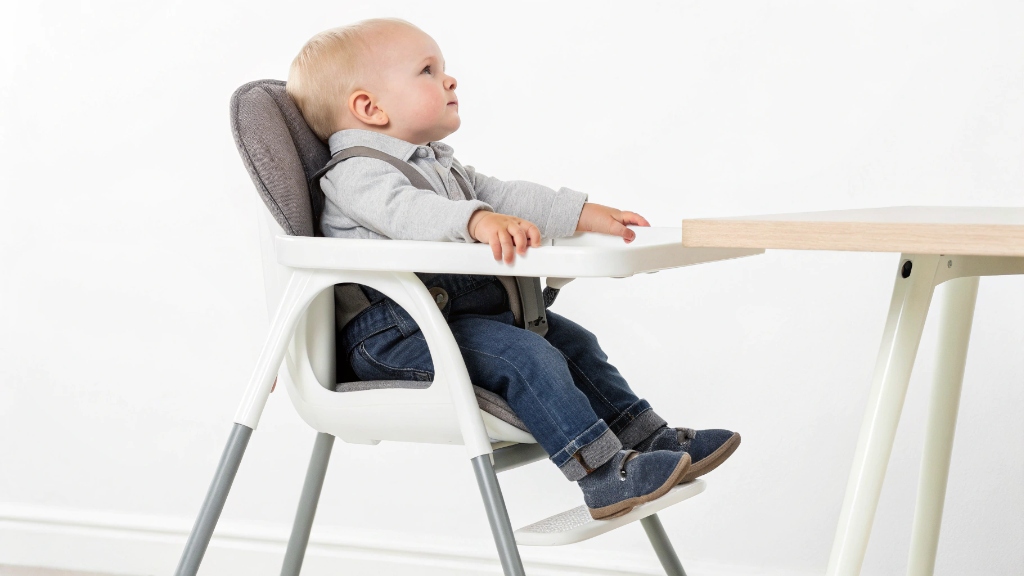
Feet must be supported.
Dangling feet increase movement, sliding, and falls.
High Chair vs Booster Seat During Transition
This is where many parents hesitate.
A booster seat is safer only if the child can sit still and the adult chair is stable.
If the dining chair:
- Is lightweight
- Has no back support
- Slides easily
then a booster seat may actually be riskier than a high chair.
This is why clear guidance matters for sellers and brands.
Common Buyer and Seller Mistakes Around Age Claims
From a market and compliance view, these mistakes cause complaints:
- Overstating age range on packaging
- Ignoring behavior-based warnings
- Missing weight limit visibility
- Poor instruction clarity
High chairs are often returned not because they are defective, but because they were used too long.
How This Impacts Product Labeling and Compliance
For brands and importers, stopping age matters for:
- Label instructions
- Warning statements
- Market claims
- Customer education
Clear guidance reduces:
- Returns
- Negative reviews
- Safety incidents
- Regulatory attention
This is especially important for EU and US markets, where misuse-related accidents still create liability.
My Role
I work closely with baby product factories, buyers, and distributors to reduce safety risks before products reach the market.
Anhui Windmill Imp. & Exp. Co., Ltd. was established in 2019 and is built on more than 15 years of industry experience in baby strollers, high chairs, and children’s furniture.
We help buyers:
- Match products to correct age groups
- Reduce misuse-related complaints
- Improve labeling and safety communication
- Control long-term quality risks
Conclusion
There is no exact birthday to stop using a high chair. The right moment depends on age, weight, and behavior.
For most families, that moment comes around age 3. For us, that was exactly when my son decided he was done sitting still.
Recognizing that signal early is the safest choice—for children and for brands.