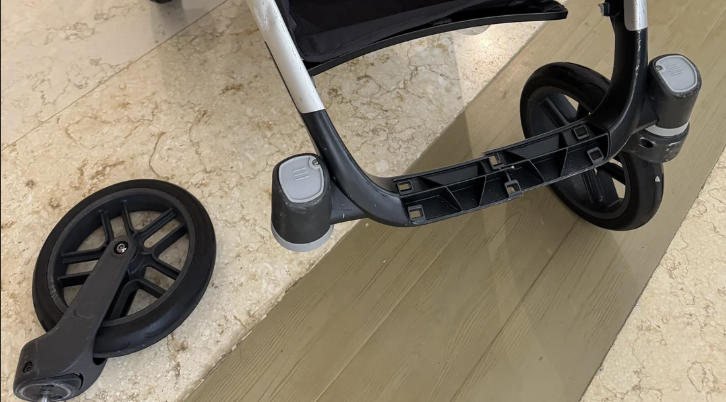
I still remember the first time I carried a stroller down the subway stairs with my first child inside.
No elevator. No staff. Just me, a stroller, and a line of people behind me.
At that moment, all the nice showroom features meant nothing.
What mattered was weight, balance, locking strength, and whether the stroller would fold when I needed it to — not when gravity decided.
After two kids and more than ten years working with stroller factories, claims, audits, and buyer complaints, I can say this clearly:
Strollers for public transport and stairs follow a completely different logic from “city comfort” or “travel light” strollers.
Direct answer:
If parents regularly use buses, subways, and stairs, the safest stroller is not the lightest one and not the biggest one. It is the one with controlled weight, strong folding locks, good balance when lifted, and predictable behavior on steps.
| Key Factor | Why It Matters on Public Transport & Stairs |
|---|---|
| Total weight | Too heavy = unsafe lifting; too light = instability |
| Balance point | Prevents tipping when carried |
| Folding lock strength | Stops accidental collapse |
| Step clearance | Avoids wheel catching |
| One-hand control | Critical in real-life situations |
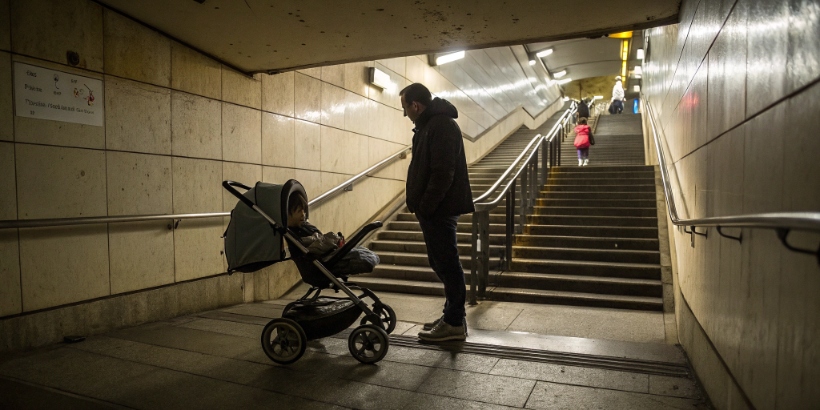
What is the biggest danger when using strollers on stairs and public transport?
Most people think the danger is falling down the stairs.
In reality, from the claims I’ve handled, the biggest danger is unexpected folding or loss of balance while lifting.
I’ve seen cases where:
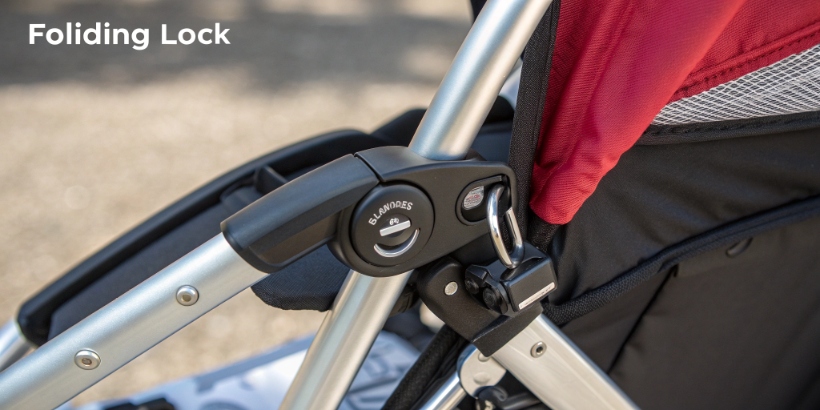
- The stroller passed EN 1888
- The folding lock passed static tests
- But the stroller folded halfway when lifted at an angle
Why does this happen?
Because standards test on flat ground. Parents live on stairs.
Factory reality buyers should know
Factories often:
- Test locks only vertically
- Ignore diagonal load
- Assume two-hand lifting
But parents on buses or subways often:
- Hold the baby with one hand
- Pull the stroller with the other
- Lift at awkward angles
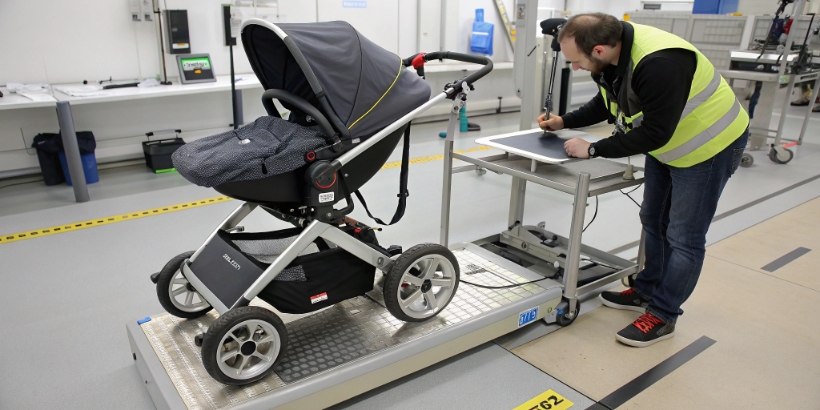
How I check this in real business:
- I lift folded and unfolded samples diagonally
- I shake the stroller mid-air
- I test secondary locks under uneven load
If a supplier refuses this test, I already know the answer.
👉 You can read another article here:
How do I choose the right stroller for city vs travel use?
How much weight is actually safe for stairs and public transport?
This question comes up in almost every buyer meeting.
Buyers ask:
“Can you make it under 6 kg?”
Parents ask:
“Can I carry it with one hand?”
My experience answer is simple:
Ultra-light strollers are often less safe on stairs.
Why very light strollers increase risk
To reduce weight, factories usually:
- Thin the aluminum tubes
- Increase plastic joints
- Simplify locking mechanisms
On stairs, this leads to:
- Frame flex
- Handle twist
- Unstable center of gravity
From real complaints, the safe practical range for public transport use is usually:
- 6.5–8.5 kg (without baby)
| Weight Range | Real Stair Performance |
|---|---|
| Under 6 kg | Easy to lift, high instability risk |
| 6.5–8.5 kg | Best balance of control and safety |
| Over 9 kg | Stable but unsafe for frequent lifting |
What buyers should check:
- Weight distribution, not just total weight
- Carry handle position
- Lock engagement sound and feel
👉 Related reading:
High Chair Weight Limits and Stability Testing Explained
How do wheels and step clearance affect stair safety?
This is a detail many brands ignore — until complaints arrive.
For stairs and buses:
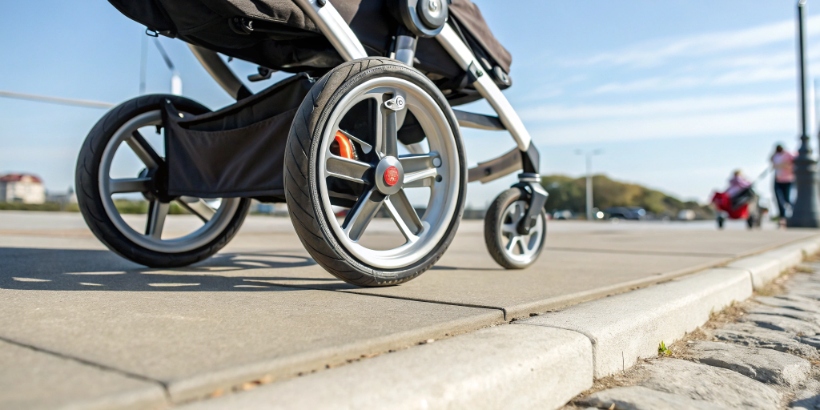
- Small wheels are common
- But wheel clearance and spacing matter more than size
Problems I see in factories
- Front wheels too close together
- Brake parts hanging too low
- Decorative suspension blocking step clearance
On stairs, this causes:
- Wheels catching on edges
- Sudden stop during descent
- Parent losing balance
In real checks, I look at:
- Distance from wheel bottom to frame
- Brake pedal position
- Front wheel swivel lock behavior
| Wheel Feature | Risk on Stairs |
|---|---|
| Low brake pedal | High trip risk |
| Narrow wheel spacing | Poor stability |
| Swivel without lock | Dangerous on steps |
👉 You may also like:
Why Do Strollers Tip Over/
What compliance points matter most for public transport use?
Buyers often say:
“If it passes EN 1888, it’s safe, right?”
Not always.
Key compliance risks for stairs & transport
- Folding lock redundancy
- Accidental release prevention
- Handle strength under angled load
Factories may pass:
- Static strength tests
- Straight-line brake tests
But still fail:
- Diagonal lifting scenarios
- One-wheel load conditions
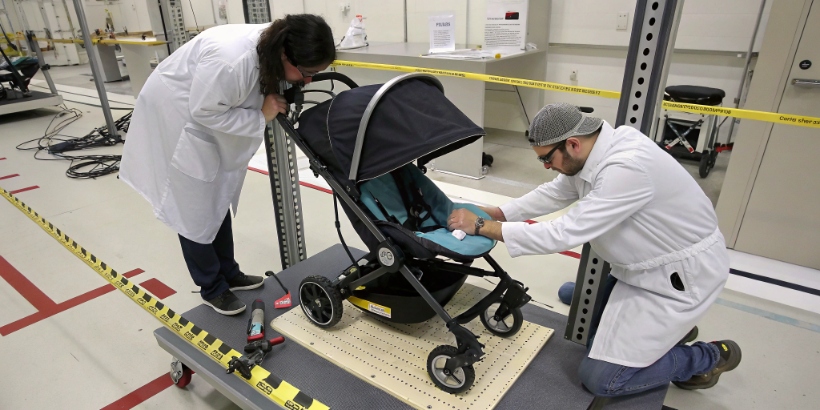
In my audits, I always:
- Ask for internal test failure records
- Review corrective actions
- Compare sample version vs mass production BOM
This is how buyers avoid paper compliance.
👉 Another useful article:
High Chair Safety Standards: EN 14988 vs ASTM F404
How we actually help buyers reduce these risks
At Anhui Windmill, when a buyer says:
“This stroller must work on buses and stairs.”
We do not start with design sketches.
We start with:
- Real user scenarios
- Transport frequency
- Parent handling behavior
Then we:
- Select factories experienced in commuter strollers
- Audit lock assembly lines
- Run non-standard lifting tests
- Freeze key components after sampling
I personally reject:
- Factories that chase extreme lightness
- Designs with single-point locks
- Suppliers who cannot explain failure cases
Because I’ve seen how fast a single stair accident turns into a brand crisis.
Conclusion
Public transport and stairs are unforgiving environments.
A stroller must behave predictably, not just look light or modern.
If buyers choose based on real handling, balance, and factory honesty, problems drop fast.
Edited by Sherry on 2026-01-18
This article is part of our Baby Stroller Safety & Selection Hub, where I explain how buyers can reduce risk and avoid recalls. Hub Backlink