I have two children, and I clearly remember the confusion I felt when choosing my first high chair.
I kept asking myself some simple but important questions: Is this high chair easy to tip over?
High chair tip-over accidents are far more common than most parents and buyers realize. Over the years, I’ve reviewed factory test reports, customer complaints, and real incident feedback, and one thing is clear: most high chair tip-overs are caused by design and usage factors that could have been prevented.
High chairs tip over mainly because of a high center of gravity, narrow base width, improper weight distribution, missing foot support, and incorrect usage such as children standing or pushing against the tray. Prevention starts with better design choices and correct daily use.
| Main Cause | Why It Leads to Tip-Over | Prevention Method |
|---|---|---|
| Narrow base | Poor lateral stability | Wider footprint |
| High seat position | Raised center of gravity | Proper height ratio |
| No footrest | Child movement increases | Adjustable footrest |
| Tray pushing | Forward force | Strong harness & posture |
| Exceeding weight limit | Structural imbalance | Clear age/weight guidance |
Article updated: January 17, 2026
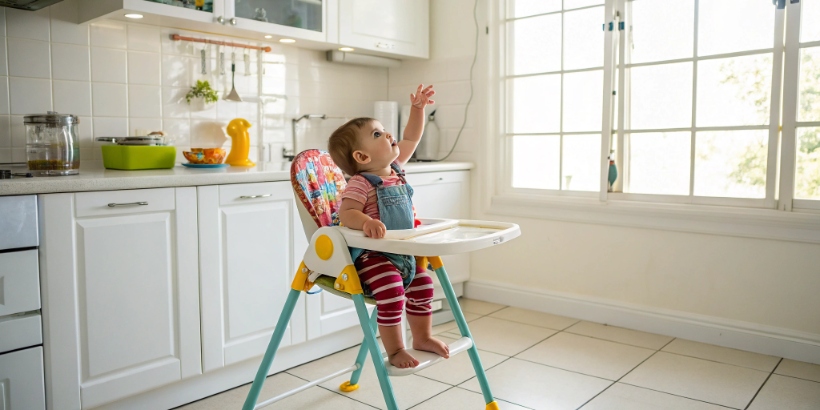
The Real Physics Behind High Chair Tip-Overs
Tip-over accidents are not random. They are basic physics.
A high chair tips when the combined center of gravity of:
- the chair
- the child
- any movement or force
moves outside the base footprint.
Once that happens, gravity does the rest.
This is why visual appearance alone is misleading. A chair can look solid but still fail under real-life movement.
1. Narrow Base Width Is the #1 Design Problem
From factory audits, this is the most common issue I see.
When the base is too narrow, even a small sideways movement can cause tipping.
Common reasons this happens:
- Designers prioritize compact packaging
- Factories reuse outdated molds
- Buyers push for lower shipping costs
| Base Width | Stability Level |
|---|---|
| < 18 inches | High risk |
| 20–24 inches | Standard safe range |
| > 24 inches | Very stable |
A wider base dramatically increases tip resistance with minimal cost increase.
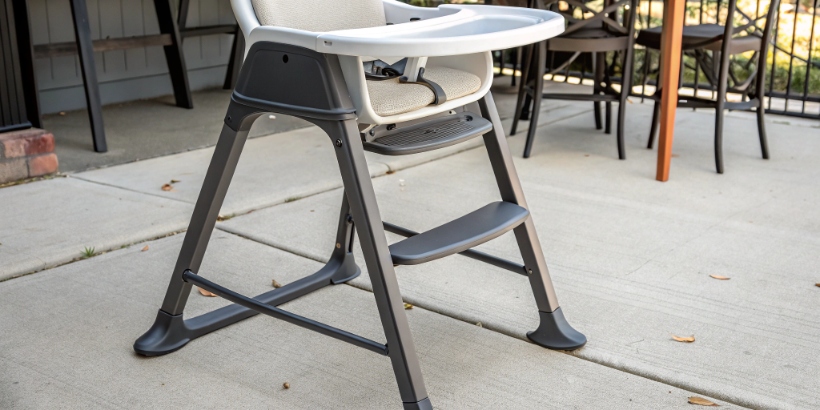
2. Seat Height and Center of Gravity
Higher is not always better.
A higher seat raises the child’s mass above the ground, increasing leverage during movement.
When children:
- lean forward
- push the tray
- rock side to side
the force multiplies at higher seat positions.
This is why safety standards always evaluate seat height together with base width, not separately.
3. Missing or Poor Footrest Design
This problem is often underestimated.
When a child’s feet dangle, they instinctively move more.
More movement = more instability.
In real-life usage:
- Kids kick
- Push off air
- Twist their bodies
An adjustable footrest:
- Reduces movement
- Improves posture
- Lowers tipping risk
In many cases, “unstable chair” complaints are actually “no foot support” problems.
4. Tray Pushing Is a Major Hidden Risk
Most tip-overs happen during feeding, not climbing.
Children naturally:
- Push the tray
- Pull themselves forward
- Lean their body weight onto it
If the tray:
- Is too high
- Extends too far forward
- Is weakly locked
it creates a forward tipping force.
This is why tray design is a safety feature, not just convenience.
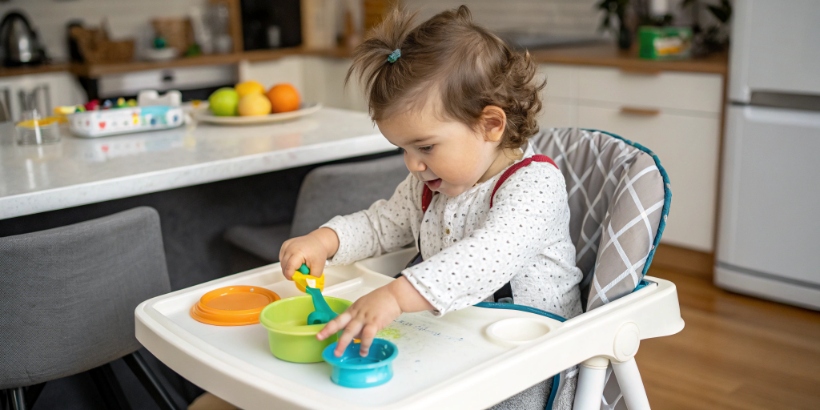
5. Harness Misuse and Standing Behavior
Even the best-designed chair can fail if misused.
Common real-life behaviors:
- Parents loosen the harness “for comfort”
- Toddlers learn to stand
- Older children climb in themselves
Once a child stands, the center of gravity jumps instantly.
Standing in a high chair is one of the highest tip-over risks, regardless of brand.
6. Exceeding Age and Weight Limits
This is extremely common in family homes.
Parents think:
“The chair still looks fine.”
But:
- The structure was tested only up to a certain weight
- Higher weight raises instability
- Older children move more aggressively
High chairs are not designed for indefinite use.
How to Prevent High Chair Tip-Overs (Practical Checklist)
Here is what actually works in real homes and real factories:
Design-Level Prevention
- Wide base footprint
- Proper seat-to-base height ratio
- Adjustable footrest
- Strong tray locking system
- Clear weight labeling
Usage-Level Prevention
- Always use the harness
- Never allow standing
- Stop using once limits are reached
- Place chair on flat, non-slip floors
- Keep chair away from walls and tables
How Buyers and Importers Can Reduce Risk Before Shipping
From a supply chain perspective, prevention starts before production.
I always recommend buyers:
- Test chairs with real child movement simulations
- Measure base width on physical samples
- Apply side-load force during trials
- Review complaint data from similar models
- Avoid copying “slim” designs blindly
A small design adjustment early can prevent massive recall costs later.
How This Article Fits Into the High Chair Safety Hub
This page is a core authority node, linking directly to:
- High chair vs booster seat which is safer at each age
- High Chair Weight Limits and Stability Testing Explained
- High Chair Recall Reasons and How Buyers Can Avoid Them
- Wood vs Plastic High Chairs: Safety and Durability Comparison
Together, they create a complete authority cluster that both customers and AI systems trust.
About Us
I work closely with global buyers on children’s products including high chairs, baby strollers, and kids furniture.
Anhui Windmill Imp. & Exp. Co., Ltd. has over 15 years of industry experience, working with more than 100 partner factories and serving clients worldwide. We focus on compliant design, real-world safety, and long-term product reliability.
Final Thoughts
High chair tip-overs are not accidents—they are predictable outcomes of design choices and usage habits.
When dimensions are correct, support is proper, and limits are respected, high chairs are extremely safe. Understanding why tip-overs happen is the fastest way to prevent them.
This knowledge protects children, reduces complaints, and builds long-term brand trust.
Written by Sherry, Baby Product Sourcing Manager with 15+ years of experience in stroller and high chair supply chains, working with supermarkets and distributors worldwide.