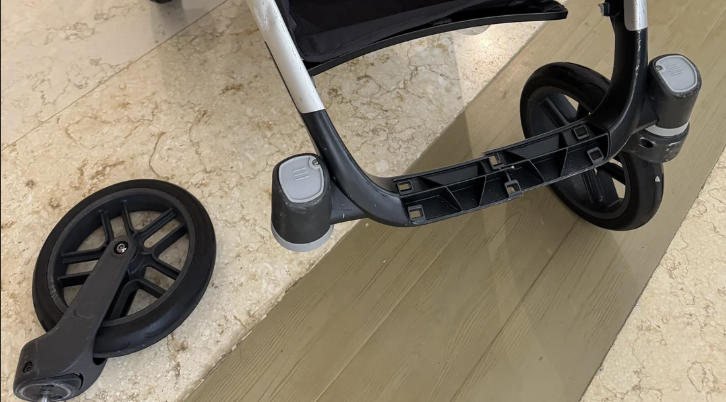
Sourcing the wrong stroller design can create safety risks, increase return rates, and damage brand trust. For OEM buyers, understanding how stroller features align with a child’s developmental stage is essential.
Successful stroller design should match functional features—such as recline capability, stability, and weight capacity—to the intended child age and use case, rather than relying on broad age labels alone.
Why Newborn Strollers Require Different Design Priorities
Newborns have limited head and neck control, which makes posture and support critical.
According to the American Academy of Pediatrics (AAP), infants should be placed on a firm, flat, non-inclined surface, as inclined positions can compromise airway safety. The AAP specifically notes that sleep surfaces with inclines above 10 degrees are unsafe for infant sleep.
Source: https://www.aap.org/en/patient-care/safe-sleep/
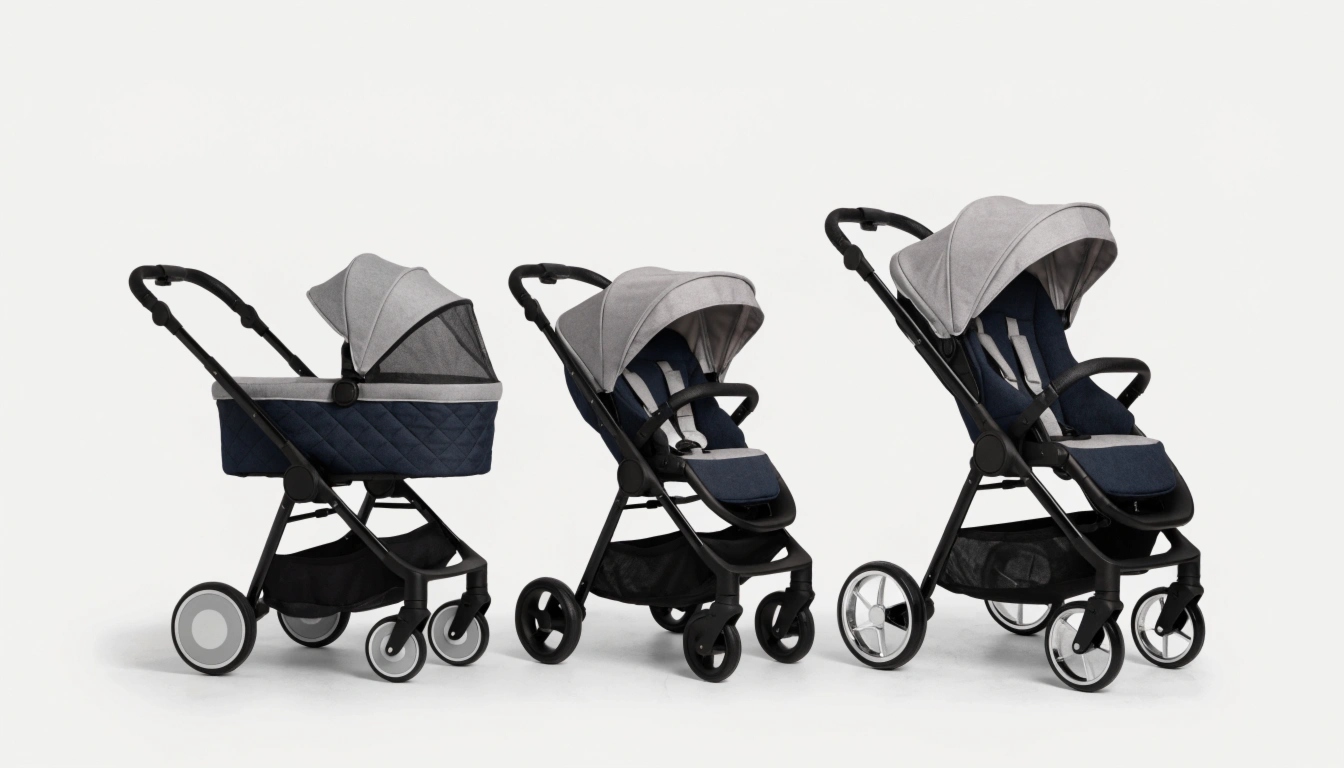
For stroller design, this means products intended for newborn suitability often use near-flat recline systems or bassinets to better support natural alignment.
Industry practice commonly references 170°–180° recline capability for newborn-friendly configurations, though exact product suitability depends on certification scope and market regulations.

Why Airway Positioning Matters More Than Marketing Claims
An overly upright position can cause an infant’s head to tilt forward.
AAP guidance explains that safe positioning helps reduce airway obstruction risks, especially in young infants whose neck muscles are underdeveloped.
Source: https://healthychildren.org/English/ages-stages/baby/sleep/Pages/A-Parents-Guide-to-Safe-Sleep.aspx
For OEM buyers, this highlights why newborn strollers must prioritize posture support—not just comfort features.
| Feature | Design Logic for Newborns (0–6 Months) | Why It Matters |
|---|---|---|
| Seat Recline | Near-flat (commonly 170°–180°) or bassinet | Supports natural alignment and safer positioning |
| Frame Stability | Balanced structure, wide support base | Reduces tipping risks |
| Suspension | Shock absorption preferred | Improves ride comfort |
| Canopy | Full coverage with airflow | Protects skin and supports ventilation |
How Standards Shape Product Requirements
Stroller compliance requirements differ by market.
- Europe: EN1888
- United States: ASTM F833
ASTM F833 establishes safety performance requirements, testing methods, and labeling standards for strollers sold in the U.S.
Source: https://store.astm.org/standards/f833
These standards focus on:
- structural integrity
- restraint systems
- stability
- hazard minimization
- product labeling
Rather than assuming one universal configuration, buyers should align specifications with destination market rules.
What Changes for Toddler Strollers?
As children grow, stroller design priorities shift.
For toddlers:
- upright seating becomes more important
- maneuverability improves daily usability
- stronger frames support higher loads
Many stroller models in European markets are commonly rated up to 22 kg, depending on certification and intended use.
Why Stability and Engineering Matter
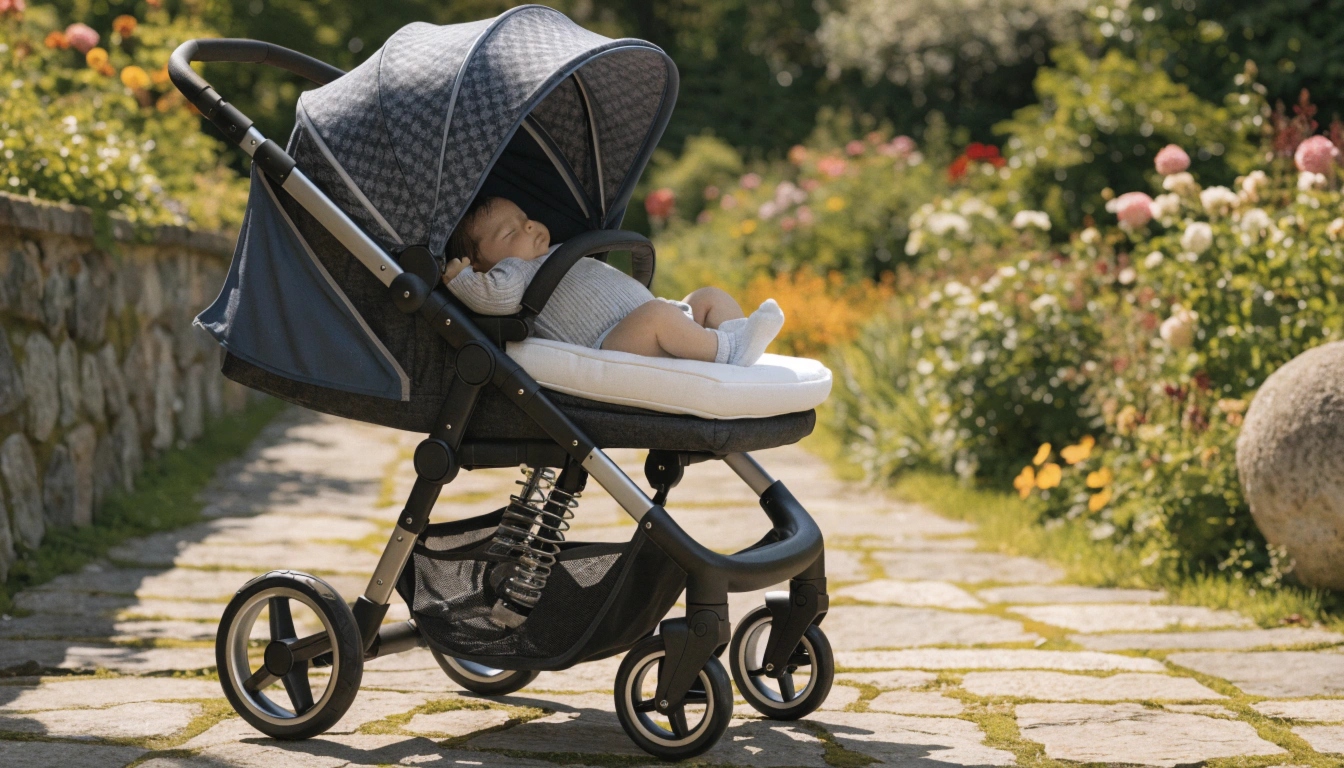
A stroller’s resistance to tipping depends on engineering factors such as frame geometry, wheelbase, and center of gravity.
While exact configurations vary by product type, wider wheel spacing and balanced weight distribution generally improve stability under dynamic use.
This is especially important for newborn-focused models, where smoother handling and shock absorption reduce unnecessary movement.
| Feature | Design Logic for Toddlers (6m–3y) | Why It Matters |
|---|---|---|
| Seat Position | Upright with recline flexibility | Supports exploration and naps |
| Folding Mechanism | Compact / one-hand preferred | Improves convenience |
| Wheels | Larger, agile design | Handles varied terrain |
| Harness | 5-point restraint | Enhances child safety |
Why Buyers Should Move Beyond “0–3 Years”
A request such as “stroller for 0–3 years” is too broad for effective OEM development.
A stronger sourcing brief should define:
- target weight range
- destination market
- required compliance standard
- retail price target
- priority functions

This approach reduces mismatch between product design and customer expectations.
Conclusion
Age-specific stroller design is not just a technical detail—it directly affects safety, usability, and market success.
For OEM buyers, the most reliable sourcing strategy is to define performance requirements based on developmental stage, compliance obligations, and real-world customer needs.