Buying a baby stroller looks simple at first. But once quality issues appear, returns rise fast. I have seen small frame issues grow into recalls and platform penalties. This guide helps buyers avoid that risk early.
Stroller frame strength and stability depend on structure design, locking systems, materials, and real user behavior. If any one part fails, the whole product becomes unsafe.
| Key Factor | Why It Matters | Buyer Risk If Ignored |
|---|---|---|
| Frame structure | Carries all load and movement | Bending, cracking, recalls |
| Locking system | Keeps frame stable during use | Sudden collapse |
| Materials | Control durability and fatigue | Early wear, instability |
| User behavior | Affects real-world safety | Misuse, complaints |
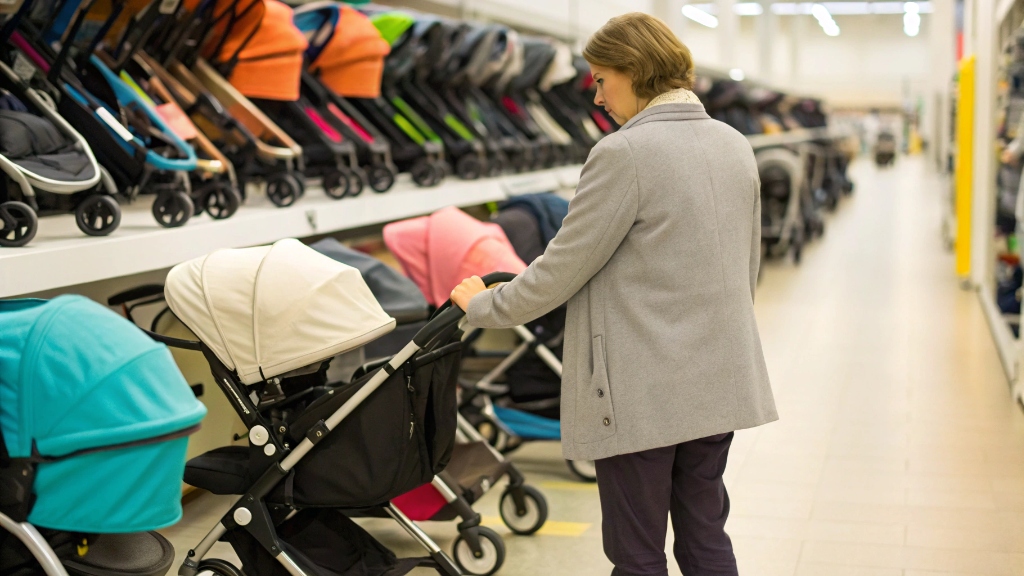
When I evaluate strollers for supermarkets and distributors, I always start with the frame. Everything else builds on it. A weak frame cannot be fixed later. That is why this topic matters even more in 2026, when recalls spread faster than ever.
Why Folding and Locking Systems Matter When Selecting Strollers?
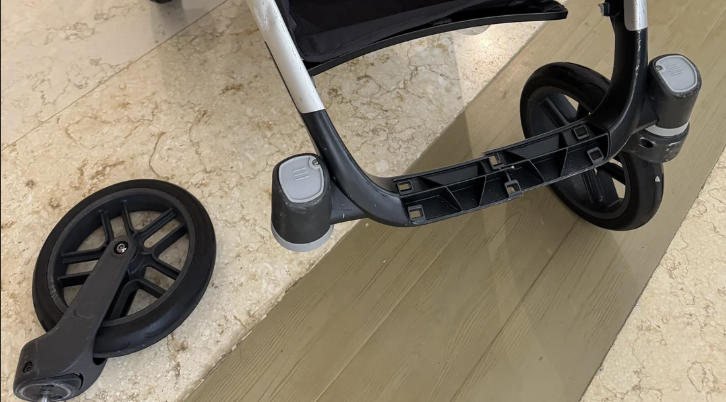
Folding systems look like a convenience feature. In reality, they are one of the most common safety failure points in strollers. Many global recalls start here.
Folding and locking systems keep the stroller structure stable during use. If they fail, the stroller can collapse while a child is inside.
| Lock Design | Stability Level | Typical Market Outcome |
|---|---|---|
| Single-lock | Medium to low | Higher complaint risk |
| Dual-lock | High | Preferred in EU & US |
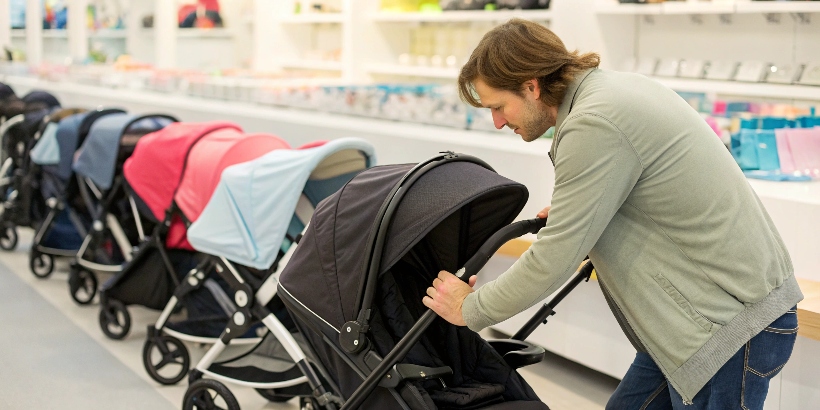
Folding failures are a top recall reason
From recall notices I have reviewed, folding failures usually involve:
- Locks not fully engaging
- Locks releasing under vibration
- Frame twisting during pushing
- Users misunderstanding lock status
These problems rarely come from one mistake. They come from design decisions made early, often to reduce cost or simplify assembly.
Single-lock vs dual-lock systems
I still see factories trying to save cost with single-lock systems. They may pass basic lab tests, but they add risk in daily use.
A dual-lock system adds redundancy. Even if one lock is not fully engaged, the second holds the structure. In 2026, buyers in regulated markets increasingly expect this as a baseline.
How I check folding safety during factory visits
I never rely only on reports. On site, I always:
- Fold and unfold at least 20 times
- Apply downward pressure after locking
- Push on uneven surfaces
- Listen for metal noise or delay
- Check for frame shift after folding
If I feel uncertainty as an adult user, parents will feel it too.
How to Control Fabric and Chemical Safety in Baby Strollers?
Many buyers separate frame quality and fabric safety. That is a mistake. Fabric choices directly affect long-term stability.
Fabric safety is not only about chemicals. It also affects how force transfers through the stroller structure over time.
| Fabric Risk Area | Impact on Frame | Long-Term Result |
|---|---|---|
| Stretching | Uneven load | Stability loss |
| Seam failure | Load shift | Frame stress |
| Aging | Material hardening | Joint wear |
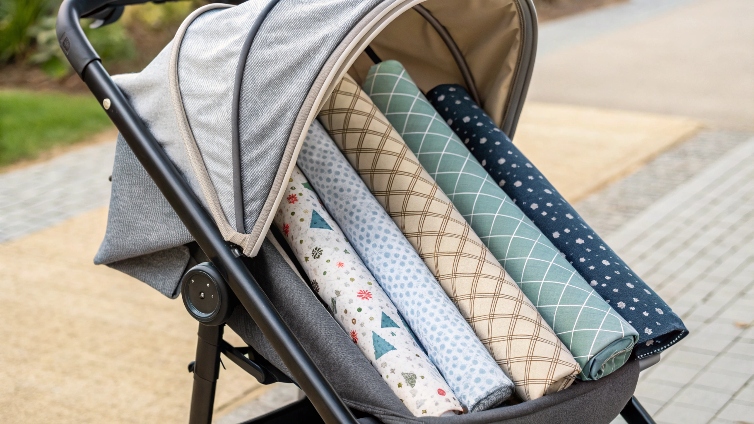
Fabric affects more than comfort
When fabric stretches or shrinks, it changes how weight sits on the frame. I have seen stable frames become unstable after six months because seat fabric lost tension.
I always review:
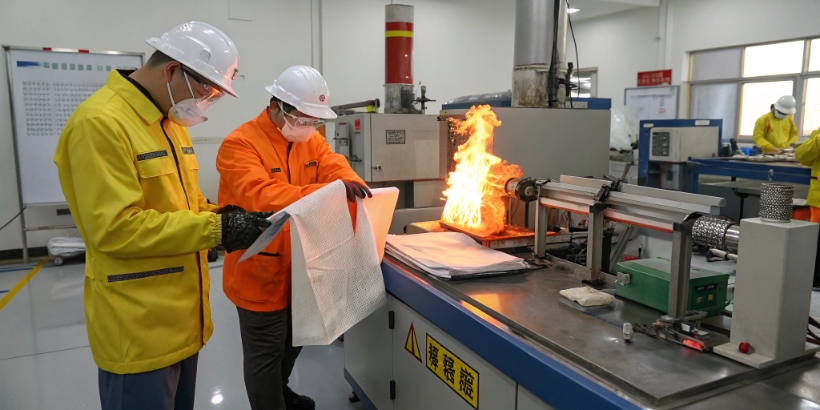
- Tensile strength
- Seam durability
- Heat and humidity aging
- Friction color fastness
These are structural factors, not cosmetic ones.
Chemical risks buyers must manage in 2026
The problem today is not missing standards, but incomplete control.
High-risk substances include:
- AZO dyes
- Phthalates in coatings
- Heavy metals in prints
- Formaldehyde in finishing
One failed test can stop shipments, even if the frame is perfect.
Common buyer mistakes
I often see:
- Only testing main fabric
- Ignoring straps and piping
- Reusing outdated reports
- Mixing suppliers under one report
A stroller is a system. Every fabric part matters.
What Makes a Stroller Easy and Safe for Parents to Use?
Ease of use is often treated as marketing. I treat it as safety.
A stroller that is hard to use increases misuse. Misuse leads to accidents, complaints, and recalls.
| Usability Point | Safety Impact | Buyer Cost |
|---|---|---|
| Brake clarity | Prevents rolling | Complaints |
| Folding feedback | Prevents collapse | Recalls |
| Harness design | Child restraint | Returns |
Ease of use directly affects safety
Parents act under pressure. If a function is unclear, it will be used wrong.
High-risk areas include:
- Brake operation
- Folding confirmation
- Harness adjustment
- Wheel alignment
These problems appear in reviews, not test labs.
How I test usability at factories
I ask different people to use the stroller without instruction. I watch mistakes. Confusion shows risk faster than any checklist.
How Frame Design, Materials, and Usability Work Together
Frame strength alone is not enough.
A strong frame with weak locks fails.
Good locks with poor fabric fail.
Well-built products that confuse users fail.
That is why I evaluate strollers as a complete system.
This approach also connects directly to stroller weight and load capacity, which affects stability perception across markets.
My Role
I work in the children’s product supply chain and focus on stroller sourcing for global buyers.
Anhui Windmill Imp. & Exp. Co., Ltd., established in 2019, builds on more than 15 years of industry experience. We work with over 100 partner factories and support more than 200 customers worldwide.
Our role is to help buyers reduce risk, avoid recalls, and keep quality stable across markets.
Conclusion
Evaluating stroller frame strength and stability means looking beyond reports. Structure, locks, materials, and usability must work together to protect children and buyers alike.
How Frame Weakness Leads to Stroller Tip-Over Incidents
Many buyers treat stroller tip-over as a usage problem. In reality, most tip-over cases start with frame design and stability issues.
When a stroller frame lacks lateral strength, small forces create big movement. This often happens during turning, curb contact, or uneven ground use. If the center of gravity shifts faster than the frame can stabilize, the stroller tips.
I have seen several tip-over complaints linked to:
- Narrow wheelbase combined with tall seat position
- Frame torsion caused by thin tubes
- Fabric stretch shifting the child’s weight
- Locking systems that allow micro-movement
These issues are not visible in static tests. They appear only in real use.
This is why buyers must connect frame structure evaluation with real-world accident analysis. I explain this risk pattern in more detail in
Why Strollers Tip Over and How Buyers Can Prevent It, where I break down the most common tip-over scenarios seen after product launch.