A Practical Guide for Buyers to Cut Risk, Cost, and Complaints
I’ve seen this many times.
A stroller passes testing. The shipment arrives on time. Sales start strong.
Then, two or three months later, returns begin to show up — not because the stroller is unsafe, but because expectations were wrong.
To reduce stroller returns after launch, buyers must control product expectation, structure consistency, usability details, packaging protection, and post-launch feedback loops. Returns are rarely caused by one defect; they come from small gaps across the entire supply chain.
| Main Return Cause | What Buyers Usually Miss | How to Fix It |
|---|---|---|
| “Feels weak” | Frame perception vs actual strength | Align structure design & marketing |
| Hard to use | Folding, brake, harness confusion | Usability testing before launch |
| Damaged on arrival | Packaging too light | Transport-level packaging tests |
| Not as expected | Over-promising features | Honest specs & usage limits |
| Quality inconsistency | Factory process drift | Strong audits & inspections |
This is where stroller projects either scale — or slowly bleed profit.
Why stroller returns are rarely caused by “quality failure”
Most buyers think returns equal defects.
In reality, returns are expectation failures.
A stroller can pass EN1888 and ASTM testing and still be returned because:
- It feels lighter than expected
- Folding is not intuitive
- Wheels behave differently on carpet vs pavement
- Parents expected it to handle heavier children
This links directly to:
- Frame strength perception → How to Evaluate Stroller Frame Strength and Stability
- Weight & load misunderstanding → How Much Does a Stroller Weight & How Much Weight Can It Hold
- Tip-over fear → Why Strollers Tip Over
If expectations are not managed, returns are guaranteed.
Control structure consistency, not just test results
Many return complaints start with phrases like:
- “It doesn’t feel solid”
- “It flexes when pushing”
- “It shakes on uneven roads”
These are consistency issues, not compliance issues.
Buyers must control:
- Tube thickness tolerance
- Welding uniformity
- Wheel alignment consistency
- Frame stiffness batch-to-batch
| Structure Risk | Typical Factory Issue | Buyer Control Action |
|---|---|---|
| Flexing frame | Thinner tubes in mass production | Lock BOM & material specs |
| Wobbling wheels | Loose tolerance | Inline inspection checkpoints |
| Noise | Inconsistent rivets | Pre-shipment functional testing |
Strong factory audits and inspections directly reduce returns — not just recalls.
Fix usability issues before customers discover them
Parents don’t read manuals.
They judge usability in the first 30 seconds.
High-return usability triggers:
- Brake requires too much force
- Folding needs two hands when marketed as “one-hand fold”
- Harness adjustment is unclear
- Locking sound is weak or confusing
Before launch, buyers should run non-engineer usability tests:
- Ask a non-trained person to fold the stroller
- Time how long it takes
- Watch where they hesitate
| Usability Area | Common Mistake | Pre-Launch Fix |
|---|---|---|
| Folding | Over-designed mechanism | Simplify or re-label |
| Brake | Too stiff or unclear | Adjust spring tension |
| Harness | Complex routing | Visual guides or redesign |
This directly connects to folding and locking system safety within the Hub.
Align stroller weight & load claims with real-world use
One of the highest silent return drivers is load misunderstanding.
Parents assume:
- “Light stroller = weak”
- “30kg capacity = comfortable at 30kg”
Neither is true — but perception matters.
Buyers must align:
- Stroller weight
- Max load
- Recommended child age & size
- Real comfort limit
| Claim Type | Risk | Best Practice |
|---|---|---|
| Max load | Misused as comfort limit | Explain recommended range |
| Ultra-light | Seen as fragile | Reinforce frame testing |
| Compact | Expect full-size stability | Clarify use scenarios |
Internal reference:
How Much Does a Stroller Weight & How Much Weight Can It Hold
Packaging damage = instant return, even if product is fine
A perfect stroller in bad packaging still gets returned.
Common packaging mistakes:
- No corner protection
- Weak outer carton
- Poor internal fixation
- No drop-test validation
Buyers should require:
- Drop tests (ISTA-style where possible)
- Vibration simulation for long-distance shipping
- Packaging review after container loading
| Packaging Issue | Result | Prevention |
|---|---|---|
| Carton collapse | Cosmetic damage | Thicker corrugation |
| Frame scratches | “Used” appearance | Inner protection |
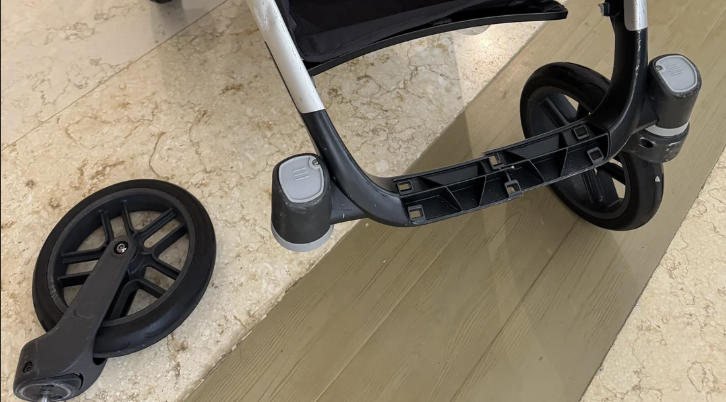
| Wheel deformation | Functional complaint | Better fixation |
Build a post-launch feedback loop (this is where 99% fail)
Most buyers stop controlling after shipment.
The smart ones start learning.
Best practice:
- Track first 60–90 days of complaints
- Categorize by type (usability / structure / damage)
- Feed data back to factory
- Adjust next production batch
This turns:
- One launch → long-term product line
- One SKU → scalable model family
Conclusion: Low returns are designed, not negotiated
Reducing stroller returns is not about price pressure or luck.
It is about system design across:
- Product structure
- Usability
- Communication
- Packaging
- Supplier control
When these align, returns drop naturally — and margins rise.